

Table of Contents
I believe in miraculous medicine.
When I go to work, I walk through
the glass doors of the ICU.
I tune out dings and beeps
and alarms that induce delirium.
I walk into rooms with people plugged
into life support / dialysis / ventilators.
I reassure myself that’s a reasonable way
to live / rehabilitate / stave off Death.
“Helping People” and “Saving Lives.”
I open another patient chart.
78-year-old Japanese-speaking female,
pulseless electrical activity
Clinically dead for 6 minutes
then revived with machines.
Now the breathing tube,
and the feeding tube,
and the heart pump have all
come out, and it’s time to restore
“Quality of Life.” “Good Luck,”
says her nurse, then mouths “Crazy.”
When I enter the room, she is chained
to the bed. I introduce myself and ask
the standard question, “Do you know
where we are today?” She looks me dead
in the eyes and says, “Hell.” I swallow.
But of course, she’s delirious, heavily
accented English and refusing an interpreter.
I explain, “We are in a hospital. Your heart stopped.”
She squints, Tugs on her wrist restraints
and says, “I was with my God. They kidnapped me here.”
I breathe in. I undo the restraints. I teach her to stand again.
She grabs me by the neck when I pivot her into a chair.
When I leave her, strapped up and re-plugged, I ask,
“Do you need anything?” She’s quiet, but firm.
“To be back with my God.”
In my note, I hover over the words
not-oriented and delirious. But
here’s the trouble: is she?
And more trouble: I believe her story.
At five-years-old I was converted into
an Evangelical Christian during a trip to Grandma’s.
My mother, NOT THRILLED, started taking me
to a Unitarian Universalist church (a hippie social club,
according to Grandma) to tone down my evangelizing
and soothe my fears about my family burning in Hell.
It worked, sort of. Slowly, so slowly, I stopped asking
Which one of you is lying about God! and uneasily accepted
two-truths: two contradictory things can be true.
God can be and not be, depending on the angle.
And the only Real Fact is how much I can never know.
Then I found Science. And even better, Medicine.
Where the method is golden and everything is backed-up.
No space for divine mystery or unanswerable questions when
Eeverything is under investigation and human LIFE is on the line.
My grandmother, ever more fanatic in her faith,
was admitted to a psychiatric hospital for severe bipolar disorder.
The scorecard was clear: God as delusion. Science as fact.
Here’s the trouble: inexplicable things kept
happening around me. And more trouble:
I still believed in God, or Universal Good,
or space for the unknowable sacred.
I met my soulmate (a practical impossibility).
He’s a scientist and a Catholic.
He reminded me of two-truths.
And that sometimes not having a clue
is the most honest you can be.
My 78-year-old Japanese-speaking angel
was diagnosed with ICU delirium and sent
to a nursing home. During our last session
we walked to her favorite window to watch the sky.
“You’ve made great progress in therapy,” I say.
She doesn’t blink. “Human beings are very adaptable.”
I squint, processing. “It’s amazing, ” she says,
“This whole other place exists. But we go through hardship. We survive.”
I go to work every day in someone else’s Hell.
But I still believe in miraculous medicine.
I believe in Helping People and preserving
Human Life and improving Quality of Life.
Though some days even those beliefs require
the most diligent practice of faith I’ve ever known.
About the Author
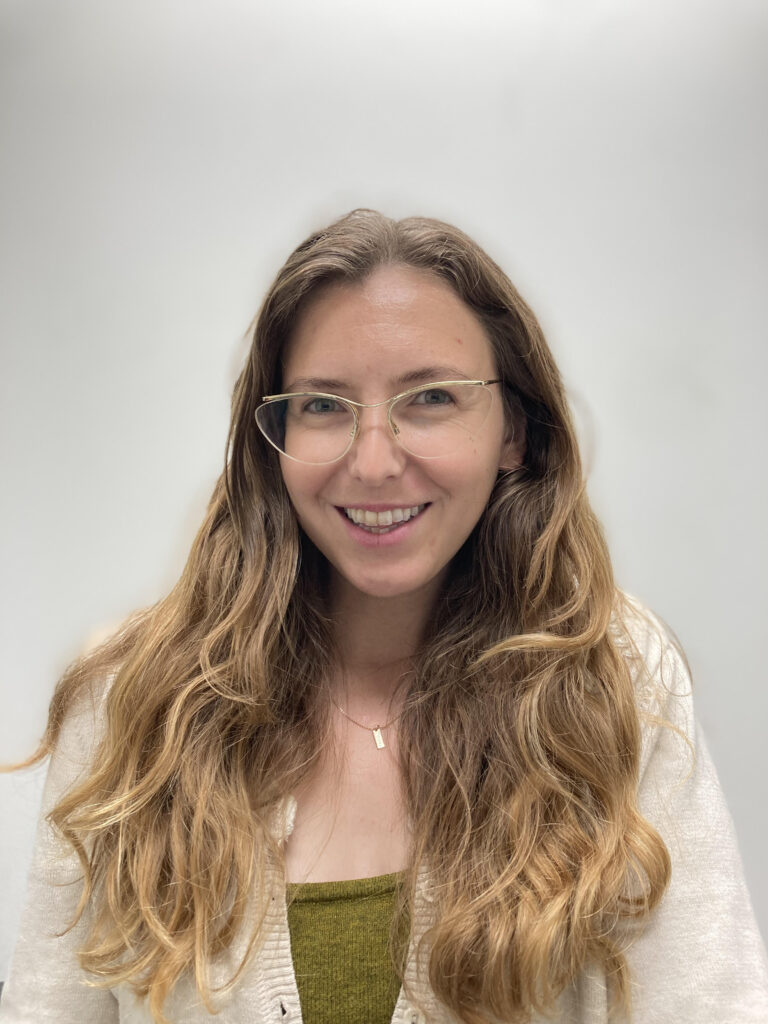
Morgan Kelly
Morgan Kelly, PT, DPT is a physical therapist and PhD student in Biokinesiology at the University of Southern California. She received a BA in Dance and a BS in Neuroscience from Duke University, a Doctorate in Physical Therapy from Columbia University, and completed an acute care residency at the University of Washington. Clinically, she specializes in treating acute neurologic conditions from the ICU to inpatient rehab. Her research focuses on cognitive and affective disorders after stroke, and their impact on physical rehabilitation. She is passionate about teaching basic science to rehabilitation students in a clinically relevant and motivating way, which she does in her role as a PhD student as well as through her podcast, Anatomy Awakened.
This work is licensed under a Creative Commons Attribution 4.0 International License.