

Table of Contents
In the ballet world, there is a term called coda. Before the last act of a ballet comes to a close, a coda is the final segment of an entire performance. A coda encapsulates the accumulation of emotions that those watching will take away with them. It is filled with larger-than-life music, impressive footwork, and the best of classical ballet techniques as the dancers give the audience the last bit of energy they have. Like the final piece of fashion down a runway or the final 100 meters in a marathon race, it is something that is meant to inspire awe.
After this, the curtain closes, the lights go dim, and the stage will be reset. The roaring of the audience’s applause will cease to echo, and the theatre will go back to an audience of empty cushions that have flipped upward waiting for their next guest to weigh them down. All will go dormant until the next production. All will go quiet. All will go dark.
Just like the theatre, my season of dormancy had just begun. My coda had reached its final crescendo.
The Accident
My story in short goes something like this:
- One Mississippi – Prepare for impact.
- Two Mississippi –
- Three Mississippi – Blackout.
Life as I knew it changed forever in three little heartbeats, leaving the date March 5 permanently etched into the interlacing neurons of my mind.
At the age of 16, I could imagine nothing less than fulfilling my dream of becoming a world-class artist and principal ballet dancer in Moscow, Russia—the pinnacle of performing arts where only the most talented are allowed to step foot onstage. I was destined for greatness and my teachers argued that I was born to be a ballerina.
But this daydream slipped through my fingers in a moment when the dashboard came crashing down on a dancer’s most vital piece of anatomy—my foot and ankle. I spent 16 months in physical therapy and ultimately risked surgery, trying to revitalize my lost career. At the time, I thought the world was ending. I was angry and impatient. This was not supposed to happen in any version of my fairytale.
The Despair
In the process of losing ballet, I started to journal. This is a glimpse of what my journal entries looked like:
“Ballet is my whole identity. Ballet is the only thing I have, the only thing I ever worked towards. Now that it is gone, I am worthless. I am no one. My identity ceases to exist like a vapor that has vanished in the wind…
“As a child, everyone told me to follow my dream; to shoot for the moon. I was told that I could be anything. So, I set my mind on the one thing I always wanted—to be a professional ballerina. I poured myself into watching videos online, practicing at home, and even making Russian flash cards at the age of 10. It was my destiny; I could feel it. Visions of my future life as a principal dancer with a sparkling tutu, elegant tiara, and perfectly-fitted pointe shoes captivated my daydreams since my first ballet class at the age of six…
“But what am I supposed to do now? Where are the instructions when you cannot pursue your passion? How do you “follow your dream” when it disappears? The dream of my lifetime was right there. I held it for a moment, but now it is gone forever.
“I am at rock bottom. I have never felt so utterly hopeless. There is no light at the end of the tunnel for me, I am sure of it. I will be walking in the dark for eternity, living a life of mediocrity because I am worthless now. I have no purpose. I have no value. Ballet was the one thing that I could do and excel at that none of my family members could do… My family is all so talented at what they do, and I will never be able to live up to that high standard anymore. I am nothing but an utter disappointment now – an embarrassment to everyone around me, a child prodigy now marked as a failure. I might as well not even be here anymore. The world doesn’t need Sophie anymore…”
Finding the Way Out
Upon reflection, I found four things were essential for getting me out of this rut.
First was faith. Faith in something bigger than myself. Faith that there is a God who had a purpose for my life even when I could not see the vision. When I was tempted to end everything, a nagging thought in my brain would say, “If you had no purpose left in this life beyond ballet, God would have taken your life in the accident; but because you are still here, your life is meant for something bigger.” That thought alone kept me alive.
John 16:22: “Now is your time of grief, but I will see you again and you will rejoice, and no one will take away your joy.”
Second was counseling and journaling. Without my psychologist, Michael, I truly do not know where I would be. He taught me so much about myself, and created an environment where I could begin to heal. He showed me that it is okay if I did not know who I was yet without ballet, because maybe that was exactly my answer. I was now someone trying new things, exploring the world, creating my new life day by day, and trusting God to lead me on the correct path. He reminded me that no matter where I am on that path, I always have worth. I was not lost, but I was learning to find myself again. He asked me questions that challenged my self-degrading thoughts and instilled in me that no title had the power to define my character. No occupation, hobby, sport, award, or anything that gave me a sense of identity made me special. I have value because of who I am, not because of what I can do.
My family also played a crucial role. Specifically, my mom and my sister, Chloe, helped me to see that my identity extended beyond a ballerina. Who are you? The response used to come easily to me like a reflex, but now I was forced to define this without the crutch of a tacked-on identity that I had known since childhood. At first, I wanted my loss of identity to have an impact on every aspect of my life. This would mean that I was correct in thinking that I was nothing without ballet. I let this go as far as impacting relationships with those I love most. I wanted my family to treat me differently, to tell me that I was worthless, that I had no value, but that never came. At first, I was left confused. Why did it seem like no one cared? Yet, in not receiving the validation that I wanted, I learned that those who truly love me and want the best for me do not care if I am a ballerina, and they will support me because they love me unconditionally.
1 John 3:1-2: “See what kind of love the Father has given us, that we should be called children of God; and so we are… Beloved, we are God’s children now, and what we will be has not yet appeared.”
Lastly, finding a passion for long-distance running helped me put all the pieces together. Running gave me a sense of power. It showed me that I can endure, I can persevere, and that I am capable of so much more than I let myself believe.
From Heartbreak to Healing
Coming to a point of peace, finding meaning for my suffering, and putting a close to this chapter of my life took years. Looking back, now five years later, I have concluded that everyone has pain in their lives, it is inevitable; but what if I could turn my heartbreak into healing—into passion?
Turning my loss of ballet into a future dedicated to a distinguished career as a physical therapist is now my most courageous determination.
Like many other athletes, from a young age I was taught to be hard-working, disciplined, and steadfast toward my goals. While I once thought that ballet was the endgame, it turns out it was merely the first chapter through which my character was built and where I attained many of the qualities that I will carry with me for the rest of my life. While ballet taught me beauty of movement, physical therapy allows me the privilege of restoring it for others – an effect that extends far beyond the stage.
The impact from the car accident should have killed me instantaneously. But I am still here, I still have value, and I still have a purpose even after my ballet career. I have found that there is hope to live for—even on my darkest days. There is always hope.
The Lesson Learned
There will always be another coda, maybe not the one that we wish for, but it will always be the one that we need.
About the Author
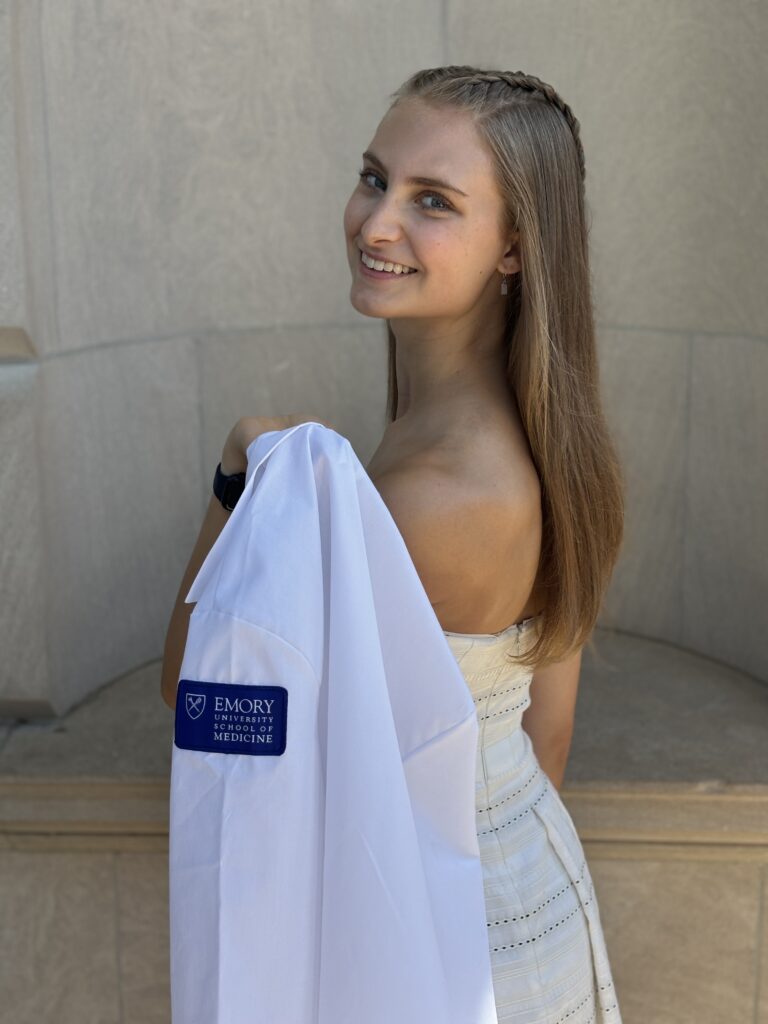
Sophie Kooy, SPT
Sophie Kooy is a second-year Doctor of Physical Therapy student at Emory University. Originally from Tennessee, she was a professional ballet dancer, performing internationally in cities including Milan, Paris, Cairo, Chicago, New York City, and Puerto Rico. After a career-ending injury forced her to step away from ballet, Sophie turned to distance running as both a physical and emotional outlet. She is now a dedicated marathoner and Boston Marathon qualifier. Sophie is pursuing a career in sports physical therapy, with a special interest in working with endurance and performance athletes.

This work is licensed under a Creative Commons Attribution 4.0 International License.