

Sucking Love Out of a Straw (for Paul)
Table of Contents
I want to touch those lips
that touched the straw
that touched the child’s hands
as he poured,
very purposefully,
love into and out of a paper cup.
I want to touch your lips. I want to feel
if the cracks when you smile have always been there
or if they develop each time you avoid
tears, inevitable tears that
soon will make
that little boy
ask you why
and where did she go—
the reason, of course,
to cry in the first place.
How long have you smiled with cracks in your lips?
How long has it been since you
slept by her side watching her barely
breath, watching her become little in spite of
the size of the tumor in her womb? Where you once dwelled.
Where your child first came from.
Unreasonable guilt holds you
here by her side
all the hours it takes to look closely
at her
form, disfigured, disproportionately small in limb
and large
in heart as she hangs on
and tries
unsuccessfully
to smile. As she hangs on her lips crack
in want of enough love to let go.
And all I do is stand here,
a sentinel to the body’s demise.
I push IV lines, push morphine lines.
I push the bed down, the lights down,
the love down
from my eyes and bleeding heart.
As in the dark,
the darkness now chiseled into
the definition of your face—those lips that
tremble, that mouth that quakes,
your eyes that hold steady and refuse to look away, the tears
that finally fall when your child
is not
looking. Then,
that face you make brave as he enters the room,
looks at early dying and does only what he thinks will do.
His mother’s lips are cracked
from not eating
enough, not drinking enough,
as yours are cracked
from smiling
too much at a growth too big
to ignore, a growth too big to fight anymore.
The child who knew, better than you,
better than me, than her—
we can only do what we can do.
The child, your child, her child
is old enough to know how to
fill a paper cup with love,
hoping this love
can be sucked from a straw, and heal
the cracks we don’t always see.
How to fill a paper cup with love
and place a straw
to the unmoveable body,
to the cracked lips of an unrecognizable
mother, unrecognizable except for the father who smiles
with the same cracks,
the same bleeding cracks
in a heart with the same broken
hope that enough love exists to let go.
About the Author
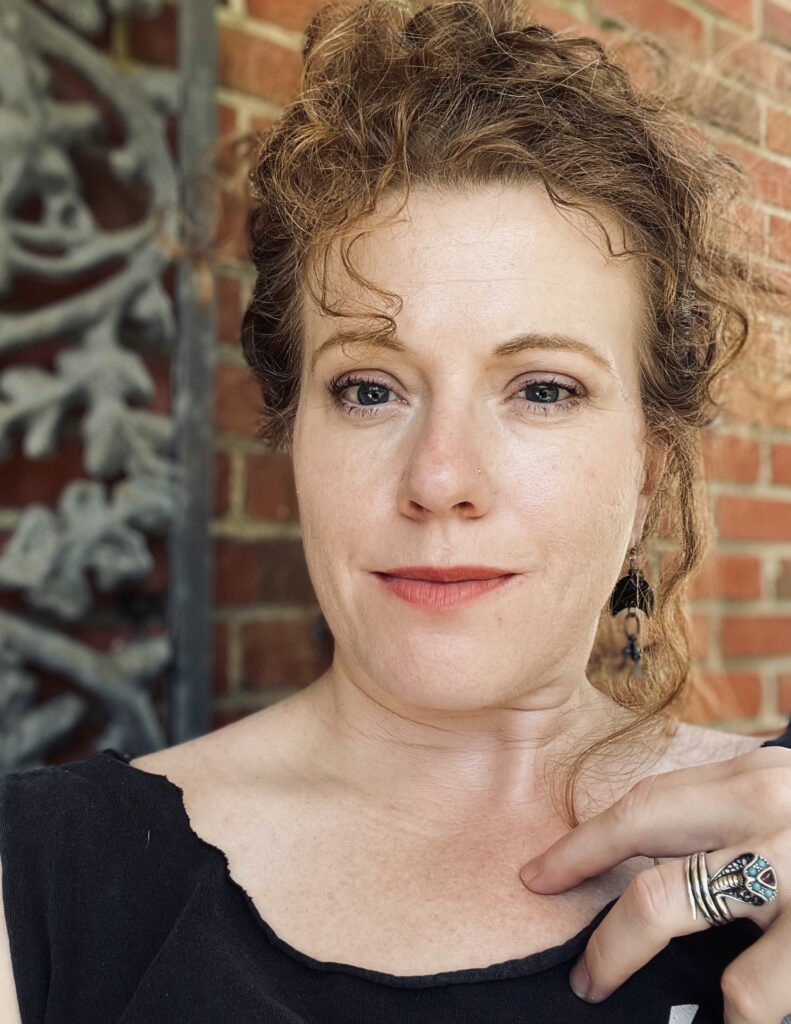
Katherine A. Keesee, OTD, OTR/L, CLWT
Katherine A. Keesee is an acute care occupational therapist, a certified lymphedema therapist, and a cancer rehabilitation specialist working in Richmond, VA. She also teaches graduate- and professional-level clinical skill development addressing death and dying as part of the life span. Both her creative and clinical work is deeply influenced by the death of her brother during the AIDS crisis and the private, discreet ways in which resiliency shows up in the quotidian details of our lives.

This work is licensed under a Creative Commons Attribution 4.0 International License.