

What I Miss When I’m Certain
doi:10.18737/0607911470
AMA Citation: Brown A. What I Miss When I’m Certain. J Hum Rehabil. 2026; Spring. doi: 10.18737/0607911470
Congratulations to Doctor of Physical Therapy Student, Argel Brown (University of Vermont), winner of the annual Student Essay Contest, co-sponsored by the American Council of Academic Physical Therapy (ACAPT) and the Journal of Humanities in Rehabilitation (JHR). The ninth in an annual series, this national contest offers a creative opportunity to ignite critical reflection in Physical Therapy students across the nation to support holistic approaches to patient care. This year’s essay prompt was:
What experience, in the classroom or the clinical setting, has challenged your assumptions and deepened your sense of curiosity as a physical therapist? How has this experience shaped your understanding of what it might take to remain deeply curious, even after years of clinical practice?
One definition of curiosity is “an eager desire to learn; a deep interest in others’ concerns.” In rehabilitation, curiosity might be understood as the work of resistance against assumptions, biases, or textbook answers when relating to patients, peers, or yourself as a learner. It can foster deeper understanding, empathy, and more holistic care.
Table of Contents
“A bad day in the clinic is better than a good day in the classroom,” one of the professors in my program liked to say. When they said this, I assumed it meant that clinical practice would be energizing because I would finally have agency: applying what I had learned, sharpening my clinical reasoning, discussing best evidence with mentors, and improving patients’ lives in meaningful ways. For most of my clinical education, that assumption held—until it unraveled during my final clinical experience.
During that particular rotation, I stayed with my brother and his wife while I interned at an outpatient clinic. The clinic itself was small, crowded, and aesthetically uninspiring, located off a freeway exit in a narrow strip of auto repair shops and gas stations. Staffing within the clinic was minimal. There were two physical therapists, one of whom was my clinical instructor and clinic director; a physical therapist assistant; a patient care coordinator; and a rehab technician that frequently used their sick days. When clinicians were double-booked, the space became chaotic: patients performed functional activities into other patients’ personal spaces; exercise interventions would bottleneck at exercise areas or be simply abandoned for less effective versions. Privacy was not guaranteed because conversations could be overheard anywhere in the one and only open clinic.
Profit-Based Care
The clinic’s main objective—to maximize billable units—pardoned that chaos. My CI routinely double-booked patients to meet productivity incentives, attributing my caseload numbers to theirs. Documentation was perfunctory because no one read beyond diagnoses and prior exercise interventions. There was no time built in to prepare for the day; charts were often reviewed minutes into visits and initial evaluations. Mentorship focused on insurance, productivity, and salesmanship. At staff meetings the pep talk and bottom line was to see more patients and bill, bill, bill.
Most nights I returned to my brother’s home to find my sister-in-law watching supernatural and alien investigation shows that were oft-punctuated by a familiar refrain of: “But could there be more to the story?” That question echoed some strong advice another professor had given me: “Hal, when you find yourself at a clinic and disagree with something or someone, get curious.”
However, I was not ready to move beyond my critique of my situation just yet.
The Crystallizing Moment
One moment crystallized my dissatisfaction with the clinic’s culture. During an evaluation for a patient with a complex injury, I referenced a myriad of school notes to guide testing and treatment. My CI admonished me for doing this, stating it made me “look like I didn’t know much” in front of the patient, and suggested I search the web for quick references to show patients instead. They advised me to, “Fake it until you make it.” It seemed my CI was saying that providing the patient with a false sense of certainty and security mattered more than transparency and curiosity. I was nettled because I felt pressured to stop being an open-minded learner and instead act like a salesperson. Pretending to be certain with an answer might gain a patient’s trust, but I am not convinced it improves outcomes.
Every day felt like a bad day in the clinic at that point, and I found myself missing the classroom. While the classroom could feel tedious, it was also where my curiosity flourished. Lectures and readings became entry points for going down a rabbit hole. I might start with a systematic review on back pain and find myself deep in articles on social determinants of health. The classroom encouraged questions and rewarded curiosity; this clinical environment seemed to suppress those elements of learning and practice.
Curiosity vs. Monotony
The experience was crushing in its monotony, but it revealed something important. Even in a setting housing decades of collective clinical experience, curiosity had withered. Productivity replaced inquiry, and familiar treatment routines crowded out reflection. I was reminded of David Foster Wallace’s The Pale King, where boredom became an existential force by quietly testing a person’s capacity to remain attentive in the absence of stimulation. As in the book, the confronting question in the clinic became whether to engage with intention or to slip into habit. The refrain from my sister-in-law’s television shows surfaced again: “But could there be more to the story?” If the answer continued to be “NO,” then I feared I was on track to become bored, certain, and perpetually dissatisfied. If the answer was finally “YES,” then I would need to focus away from my looping critique of the clinic.
It took half the duration of my internship to move past my resentment toward the clinic’s culture and incentives. I accepted this was not a place where I would work long-term. The clinic was not evil, the clinicians and supporting staff were not bad people, the business model was objectively right to make a profit, and the patients would not get the care they needed if the clinic was not there at all. There was more to the story. This experience made me newly curious about a different question: How does a physical therapist remain deeply curious in environments that actively discourage it?
A Personal Solution
As a student with limited autonomy, my response was modest but intentional.
– I reopened my classroom notes and kept a running list of questions to research during patient cancellations. When a patient asked a question I could not answer, I returned with the best available evidence at their next visit.
– I identified community-based geriatric and Parkinson’s exercise programs within a reasonable driving distance so patients had options for continued progression after discharge.
– I reviewed current CPGs rather than defaulting to generic “pick-an-impairment-any-impairment” based care. I researched, I dove into rabbit holes, I was curious as an act of student physical therapist civil disobedience.
I waited to be harangued for my reliance on notes and research articles yet again, but it never came. Curiosity, it turned out, did not hinder productivity. It quietly improved care and may have left a positive impression on patients and providers alike.
Cultivating Curiosity for the Patient’s Sake
This clinical experience challenged my assumption that curiosity is sustained automatically by clinical practice. Instead, I learned that curiosity is fragile. Curiosity is influenced by culture, values, and how one chooses to spend time. It must be cultivated and sometimes protected deliberately. Remaining curious after years of practice may require resisting productivity pressures, tolerating uncertainty, and choosing humility over pride when confronted with unknowns. It may require reopening notes, asking unfashionable questions, and remembering that evidence-based practice is a daily yet evolving discipline.
I understand there will be clinical settings and colleagues that dampen curiosity in the pursuit of efficiency and profit. My final clinical experience taught me that the strategy for surviving and resisting those environments is deceptively simple: do not stop asking yourself questions and wondering “but could there be more to the story?”
Curiosity, I keep learning, is not a luxury afforded only to those who practice in ideal settings. Maintaining a posture of curiosity is a central aspect to a physical therapist’s ethical commitment to excellence; one that must be practiced and prioritized, despite the inherent challenges in today’s healthcare environment.
About the Author
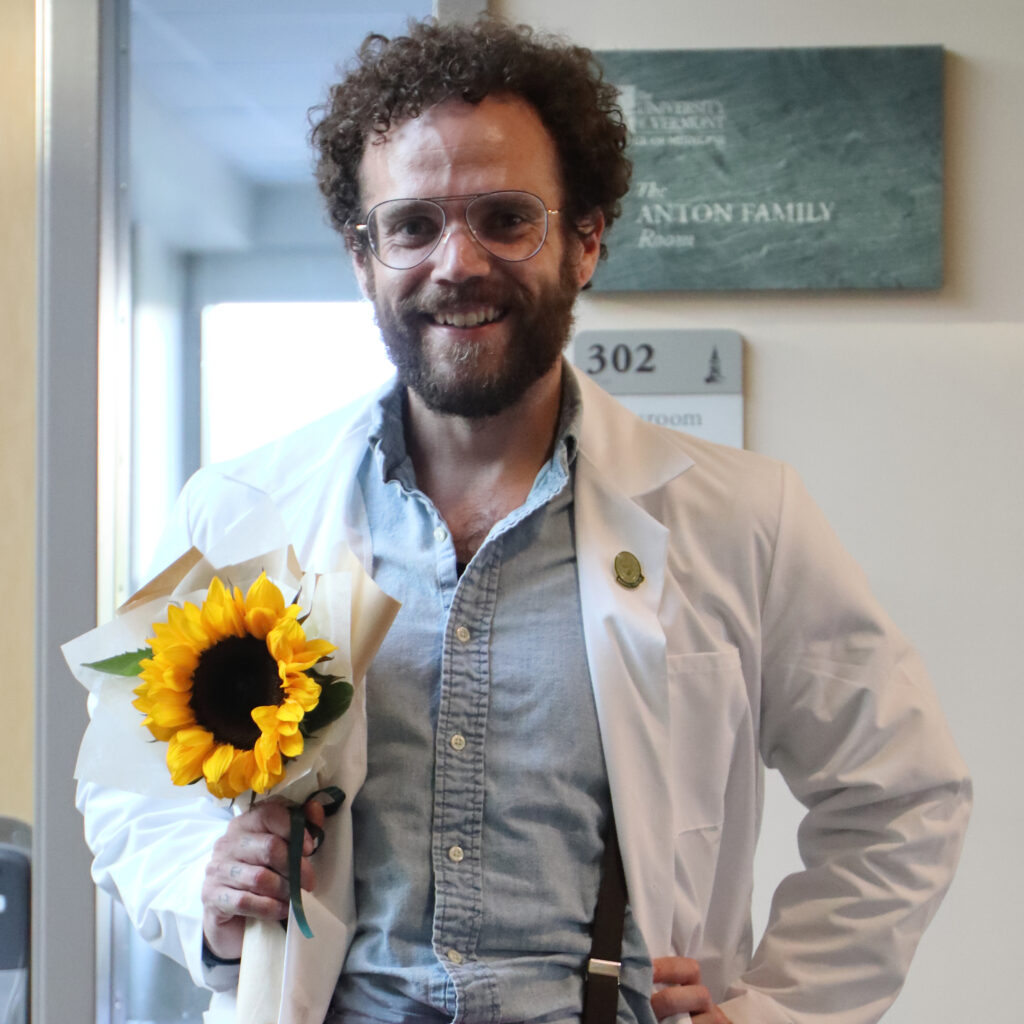
Argel Brown, SPT
Argel “Hal” Brown is a Doctor of Physical Therapy student at the University of Vermont with a background in kinesiology and community-based movement training. Drawing from lived experience, he is particularly interested in health equity, primary and primordial prevention, and the role of physical therapy in community health promotion and advocacy. He is currently seeking a PhD program and mentorship to further develop these interests.

This work is licensed under a Creative Commons Attribution 4.0 International License.