Introduction by Brandon Ness
Growing up, every spring I would observe signs of Garden Season: small packets of seeds, various tools of different shapes and sizes, and crates of seedlings. Our farm had a sizable garden, one that seemed to expand each year. My grandfather was the driving force behind this effort, and he welcomed my siblings and I to join him in digging, planting, and other tasks. I learned about several elements that can either contribute to a successful year or leave one with a feeling of disappointment. Some elements in this equation were out of our control (pests, climate, etc.); however, it was well understood that the garden needed proactive, strategic support to help it thrive.
I learned about the importance of basic concepts that apply to most plants in the garden, such as spacing, depth, soil, and nutrients, but also about the unique supports offered to specifically help some members of this garden community reach their full potential. That could be a trellis for climbing vines or a grounded stake to support the stem. Before the shovel even contacted the ground, the garden was mapped out to accommodate not only the space of the growing plants, but the supports that were needed to help them flourish.
I view accessibility and disability in physical therapy education from a similar perspective—proactively designing supports to create an accessible experience where all students have the best opportunity to reach their full potential.
Attending the 2024 Inclusive Horizons Summit: Advancing Accessibility and Disability Equity in Physical Therapy Education in Chicago, IL offered a space to learn from each other and hear the lived experiences of students, faculty, clinicians, and other stakeholders.
The Summit experience, and others noted here, have inspired reflections by myself and three of my faculty colleagues on support and accessibility.
My hope with this narrative is that my drawings of garden elements serve as a visual representation of concepts related to disability, and serve to help promote accessibility in physical therapy education. The written portions herein expand on these concepts, based on the individual experiences of the authors.
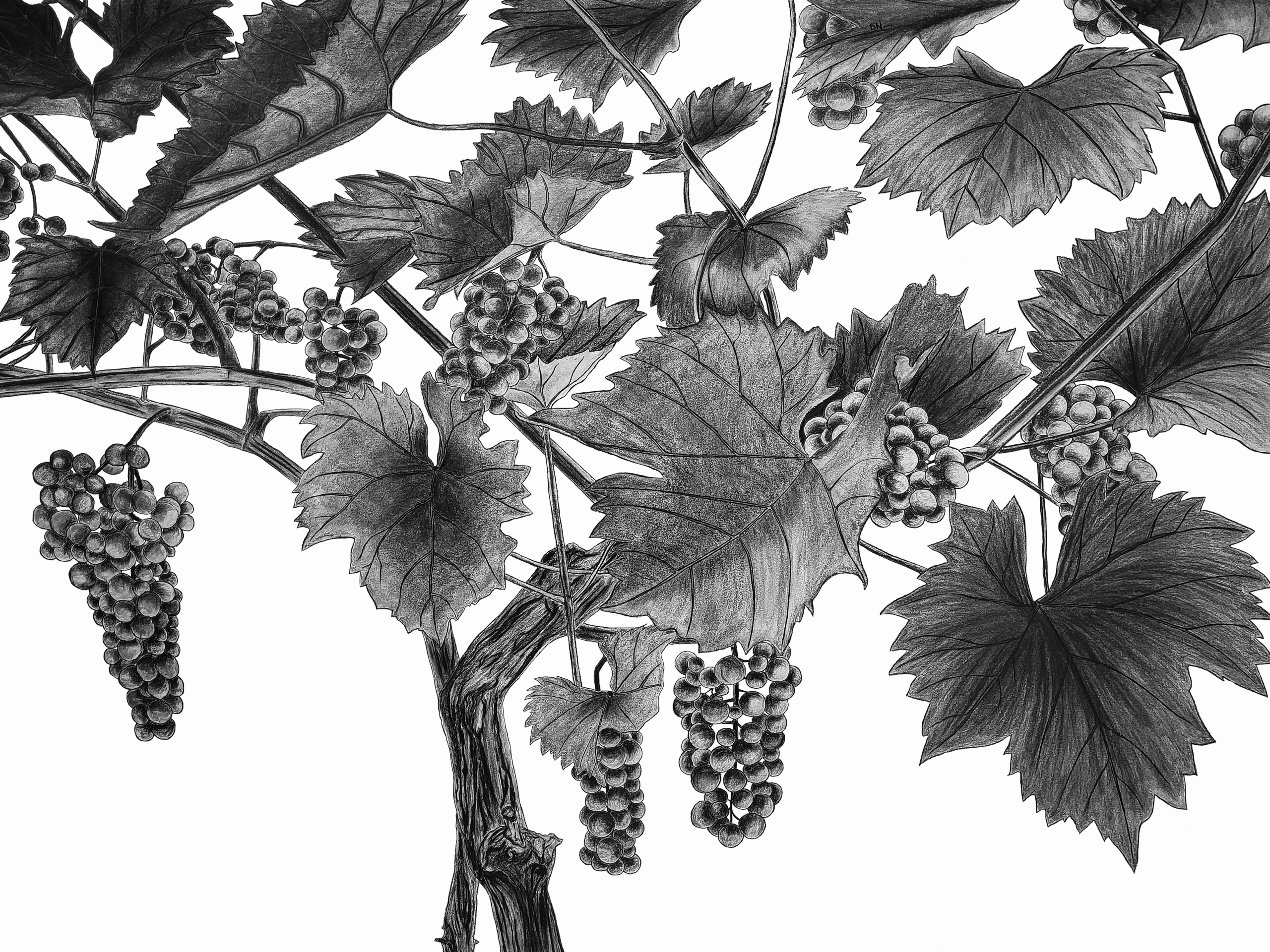
Optimizing the Learning Experience
The first drawing of a grapevine (Figure 1) offers perspective on providing learner supports/accommodations to ensure equitable access in the learning environment. When viewing the image, it can be easy to get lost in the organized randomness of the grapevine elements—appreciating the grape clusters, trunk, leaves, etc. Without paying careful attention, or intentionally seeking them, the viewer will notice something is absent: the supports. To reach its full potential, a grapevine is typically offered supports such as ground stakes, trellis wire, and other provisions.
Such practices align with elements of the Universal Design for Learning (UDL) framework. In the following Reflection, Neeti Pathare discusses UDL, providing concrete examples of UDL application in physical therapy education. She links UDL principles to supportive strategies for students with disabilities.
Reflections on the ‘Universal Design for Learning’ Framework
by Neeti Pathare
As an avid gardener, I have come to deeply appreciate the philosophy that “no one size fits all.” Some plants bloom best under bright sun, others prefer the shade. Some thrive in acidic soil, while others need more alkaline conditions. Over the years, I have naturally attempted to create best supports for my plants to thrive, cultivating a garden that offers distinct and vibrant blooms each season.
On a chilly February day in 2023, attending a faculty development seminar, Universal Design for Learning in Medical Education, allowed me to view my classroom through a different lens—as a gardener. My learners in the physical therapy classroom come with rich, diverse backgrounds and lived experiences. Universal Design for Learning (UDL)’s pedagogical approach, which shifts the focus from trying to change the learner to intentionally designing learning environments that support all learners, connected with me. Rooted in the philosophy, “Reach everyone, teach everyone,” it embraces the foundational belief that learner variability is the norm—not the exception. This empowered me to cultivate a culture in the classroom that organically supported diversity as a strength rather than a challenge. Much like gardening, teaching with UDL means creating fertile conditions where every learner—like every plant—has the opportunity to thrive. By reducing barriers in advance, we can maximize learning opportunities for all.
UDL encourages the creation of flexible learning environments that rests on three principles:
- Providing multiple means of representation (how information is presented).
- Engagement (how students interact with content).
- Action and expression (how students demonstrate their understanding).
This challenged me to rethink my entire teaching garden.
Inspired, I began implementing UDL in our classroom by integrating some practical measures. I started with the course syllabus—the seed packet, if you will—which often serves as a student’s first impression of the course and instructor. The tone, structure, and accessibility of a syllabus can shape students’ perceptions of both the course and the instructor. In our redesign, we aimed to make the syllabus more dynamic and engaging—better suited to different learning styles. Rather than presenting a 20-page static document, we extracted the most important elements into a user-friendly, visually-appealing format. Key components were grouped using a consistent color scheme, and click-through buttons provided quick, digestible access to essential information. The feedback was robust; students felt more welcomed and less overwhelmed from day one.
We extended this multimodal approach throughout our courses. Each week begins with a preview video by the instructor, presenting clear objectives, offering clinical tips and fun facts. The lecture videos are annotated and accompanied by transcripts and slides, allowing students to choose their preferred format. During synchronous sessions, students engage with the material through web-based multiple-choice quizzes, case studies, team-based learning, and worksheets. This variety supports different learning preferences, clarifies expectations, and improves confidence in the learner.
Applying this to assessments, in our research-based course, instead of requiring a traditional critical appraisal paper, we allowed students to submit video assignments. In our curriculum, UDL offers multiple paths to access knowledge—reading, listening, watching, creating—and flexible means to demonstrate mastery.
UDL has allowed me to promote a growth mindset in my classroom where conformity to a singular approach is not expected. Just as biodiversity strengthens my garden, learner diversity enriches my classroom. By designing learning environments that are inclusive and intentional, we do more than support individual growth; we cultivate a vibrant, sustainable learning ecosystem.
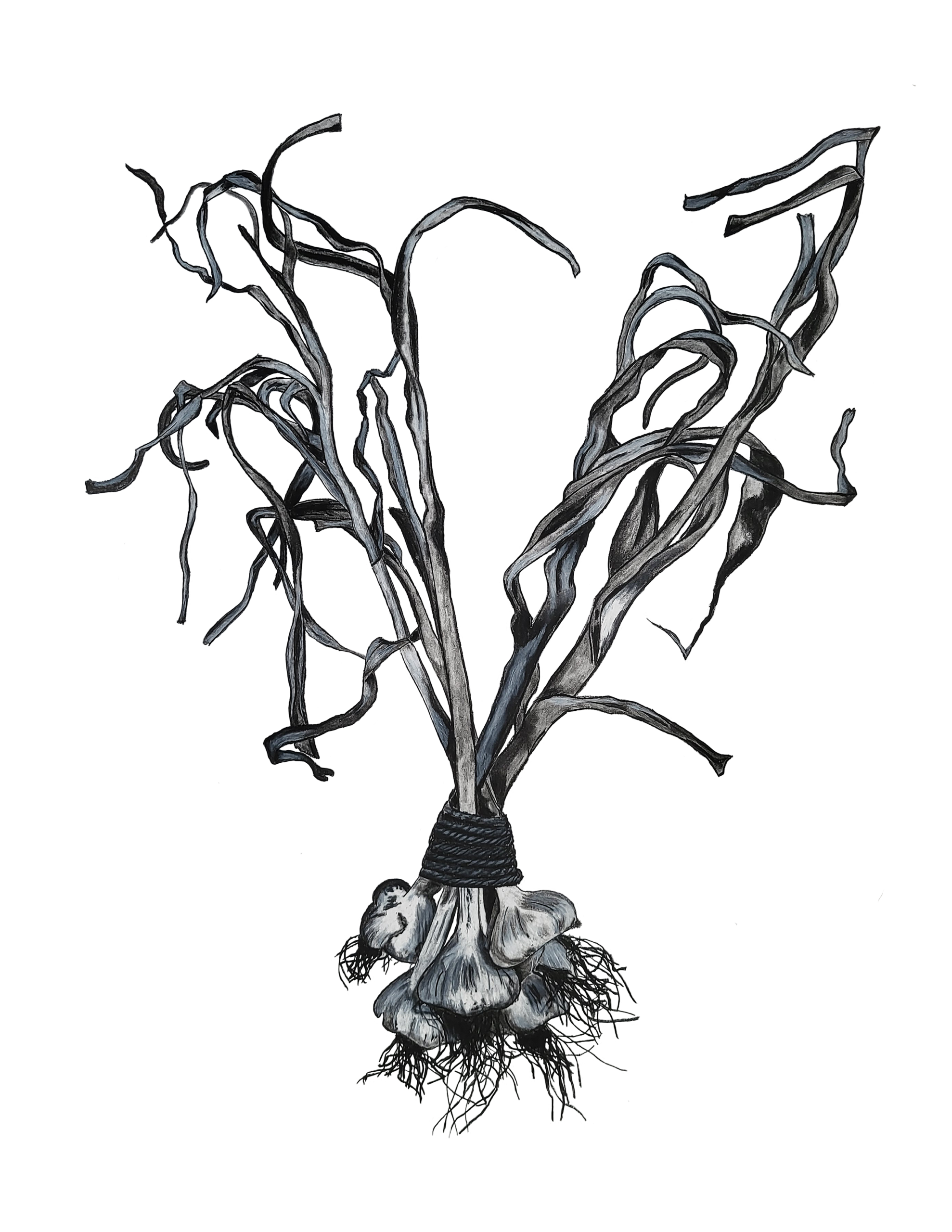
Appreciating the Whole Student
The drawing of a garlic clove (Figure 2) aims to illustrate the concepts of visible and invisible disabilities. Invisible disabilities are disabilities that may not be readily apparent or recognized by others. Typically, the bulb and roots of the garlic plant will exist below ground, while the visible portion, the stem and leaves, will grow upward. In the image, there is no soil to separate the aspects of the plant that would be located above or below the ground, which allows the viewer to appreciate a continuity of the elements. As educators who work with students who have disabilities ‘above and/or below the surface,’ we need to create a classroom that is supportive of the whole student.
In the following piece, Melissa Burgemeister offers her reflections on these concepts.
Reflections on Looking at the Whole
by Melissa Burgemeister
The saying, “Don’t judge a book by its cover,” is likely familiar. However, have you ever passed judgment on something growing in the garden based only on what lies above the surface?
Imagine yourself exploring a garden flourishing with garlic. Your eyes seeing various shades of green, white, or brown on the exposed stems and leaves. Your fingers feeling short or long stems, some curly, smooth, or brittle. Your nose smelling something pungent, or maybe nothing at all. Experiencing these senses, you realize there is diversity among the garlic—clear similarities and striking differences. Now, you’re invited to choose a garlic bulb. Which one calls to you?
As educators, it’s essential that we stay aware of our own biases. Think back: why did you choose that particular garlic bulb? What drew you to it? Was it the shape, the color, the feel, or maybe even the smell? Now, consider how that simple choice might mirror our professional lives. Are we, perhaps unconsciously, more inclined toward certain students over others? Do the things we can see, touch, or smell—those surface-level traits—shape our comments, our body language, our decisions? And should they? Recognizing and acknowledging our biases is a vital step in supporting the richly diverse students we serve. Working to reduce implicit bias isn’t just a noble goal; it’s a necessary one. After all, not every garlic bulb looks the same, but each one brings its own unique flavor to the table.
Let’s dig a little deeper—pun intended! What might we be overlooking by focusing only on what’s visible above the surface? Beneath the soil lie the bulb and roots—vital, unseen components. Surrounding them are essential nutrients, quietly providing support. These hidden elements are just as crucial to the plant’s growth as what we see above-ground. Now, think of your students. How much might they be keeping below the surface?
When it comes to disability, some signs may be visible—above the surface and recognizable. But others remain hidden, undisclosed, and deeply personal. Some students choose to keep this information to themselves, along with other parts of their identity or experience, for reasons we may never fully know or understand. To truly help all students thrive, we must look beyond appearances. We must consider not only what is visible, but also what may be quietly growing, struggling, or waiting to be nurtured beneath the surface.
One of the often-overlooked disabilities is color vision deficiency. Early in my teaching career, I was unaware that some students might choose not to seek out accommodations designed to support them. As a new educator, I assumed—incorrectly—that students would always come forward, and I would simply make necessary adjustments based on their documented needs. It never occurred to me to design assessments that were accessible to all students from the start.
After one of my first exams, which required color recognition to identify anatomical landmarks, a student who had performed poorly reached out. They shared that they had a color vision deficiency, which made it difficult to distinguish the structures. They told me this had never been an issue before and expressed fear about how it might affect their grade. I, on the other hand, felt ashamed. I had chosen the colors for that exam without a second thought, unaware that such a simple decision could create a barrier.
That moment was a turning point. I realized that, with just a few thoughtful modifications, I could make my assessments more inclusive—not just for some, but for all. From that day forward, I committed to becoming an educator who sees and supports the whole student—what is visible, and what may remain unseen.
Attending the Inclusive Horizons Summit: Advancing Accessibility and Disability Equity in Physical Therapy Education has transformed my perspective on growing garlic. Now, as I stroll through the garden, my attention includes the visible and the hidden. I must consider what I cannot see, feel, or smell. The absence of soil in the image serves as a poignant reminder to embrace the entirety and strive for inclusivity. By looking beyond the surface, we ensure nothing vital is overlooked in our quest to create accessible environments for everyone.
As you reflect on your walk through the garden, has your perspective on garlic changed?
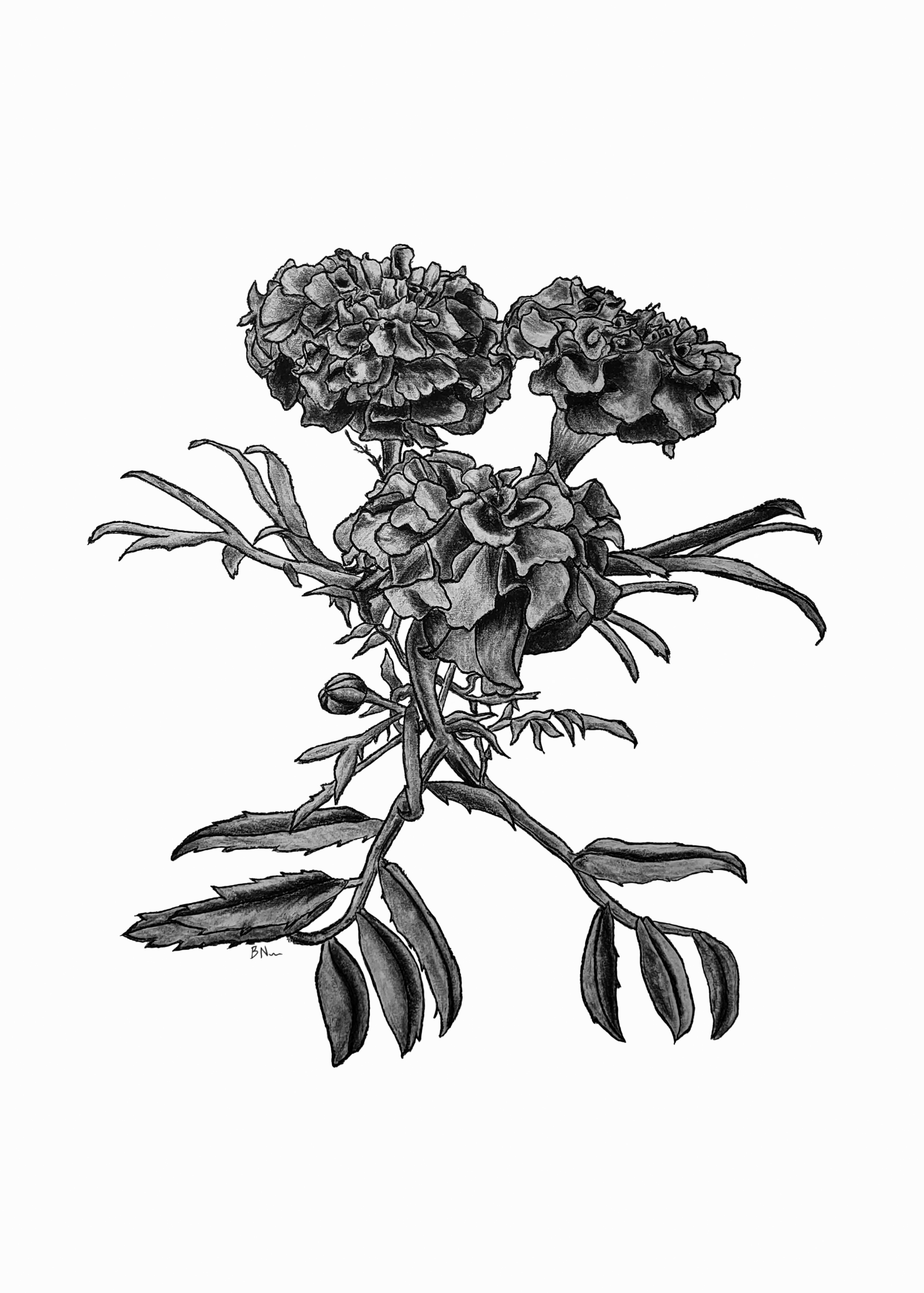
Strength in Classroom Diversity
The marigold (Figure 3) represents the power of garden (ie, classroom) diversity. Inclusion of marigolds can improve the soil quality for other plants, leading to a garden that is better able to flourish. This aligns with the notion that a classroom of students with diverse backgrounds and lived experiences, specifically in the instance of students with disabilities, allows for improved client-centered practice, and reduces negative stereotypes.1-3
Here, Tawna Wilkinson discusses her experience in clinical and educational contexts, reflecting on the value found in optimizing individual abilities and appreciating classroom diversity.
Reflections On a Garden – From the Perspective of a Pediatric Physical Therapist and Program Director
by Tawna Wilkinson
I am a physical therapist, an educator, a daughter, a sister, a wife, a mom, and a grandmother. Who I am and how I see the world have been molded through these varied lenses. This list’s order is not indicative of the weight by which my viewpoints are formed; rather, it is simply a list of my identities. Still, these identities are not all-inclusive. My story draws mostly from my experience as a pediatric physical therapist. It is perhaps through the many years of working with children of all ages that I have formed my belief that all individuals have capabilities, and our beautiful differences strengthen the way in which we see the world and interact with others.
Our abilities are not formed in the absence of experience, practice, support, reinforcement, and resources. Some may argue that there are innate abilities, and I agree that some individuals require less practice or resources to excel. In the pediatric curriculum, we highlight the importance of environment on brain development—how imposing challenges combined with proper supports can help a child and family thrive.
We all have unique abilities. How we build upon capabilities to maximize our abilities must be individualized—designed around limitations that cannot be altered, and enhancing areas that can. I have seen a child with no verbal abilities and dependent on others for mobility write the most beautiful poetry once surrounded by the right community and given the right resources. I witnessed barriers to her achievement simply because of others not seeing the capabilities—not making the invisible, visible—the teachers who lacked training and resources to uncover her cognitive abilities that hid beneath her motor and language inabilities.
I have witnessed the journey following the most unanticipated tragedies for young lives and their families—watching the strength by which they overcome unfamiliar obstacles and new challenges—and the therapists and other professionals who surround these families empowering them to adapt, reframe, and appreciate small victories. The ultimate empowerment comes from seeing potential of self by observing the victory of another whose story mirrors that of your own. What an amazing gift for a child to receive guidance from someone who has succeeded in their own journey overcoming barriers—the adult with cerebral palsy now guiding a child and family navigating the same diagnosis.
My experiences with children and their families translate to my life as an educator. For the final piece of my story, I ask you to envision the garden—the land as learning environment, soil as community, the nutrients as resources, trellises as supports, educators and clinicians as gardeners. The land is what we make of it and the community is what we plant within. Diversity strengthens what a garden produces—the soil that is enriched, a community that is connected from roots to blooms. It is through this community and these beautiful differences that our learning environment is enhanced, perspectives are broadened, and patient-centered clinicians are developed.
There is nothing more powerful than working alongside others and experiencing their world through their eyes. The Inclusive Horizons Summit: Advancing Accessibility and Disability Equity in Physical Therapy Education provided this opportunity—to envision others’ journeys, to hear the impact they had on educators, patients, and families.
It is time to grow the gardens—building the community with a beautiful blend of lived experiences that strengthen our human connection and the abilities of all to meet the needs of all—ALL of our students, ALL of our graduates, ALL of our clinicians, ALL of our patients and families. Our students are the future gardeners.
How are you preparing the land? What are you planting within? How are you preparing your gardeners?
Some Final Thoughts to Consider
After reading the reflections from Neeti, Melissa, and Tawna, similarities emerge while appreciating the uniqueness of their voices. Common threads of finding power in classroom diversity, cultivating individual strengths and abilities, and adapting the classroom so everyone can flourish were discussed and illustrated through the garden analogy.
Now, please close your eyes, and imagine what is not directly seen in the visuals—the supports that give structure, the soil separating the visible from the unseen, and the finished garden. Our hope is that all supports remain available—including those that are unseen—and that invisible disabilities are nurtured within an environment that allows everyone to grow. You are the creator of your own unique garden, giving attention to many elements that are beyond what is seen.
If you are an educator, please consider asking yourself the basic question: “Are you tending to your garden?” as you aim to provide the best, most accessible educational experiences for students with disabilities.