

Counting What Matters
doi: 10.18737/0607534871
AMA Citation: Soper K. Counting what matters. J Hum Rehabil. 2026;Spring. doi:10.18737/0607534871
Table of Contents
The room went quiet
as if the air stalled mid-breath.
One sentence split our life.
Before.
After.
I watched his face,
afraid cancer would steal more than his body.
Afraid it would take his laughter.
His joy.
The future I had imagined.
Fear clotted behind my sternum.
Constant. Arrhythmic.
Too fast to ignore.
Every breath a question.
Every silence a warning.
Every plan suddenly uncertain.
White halls. Bright lights.
Scans. Blood work. Treatment plans.
Doctors shape hope with careful words.
Voices hold chaos at bay.
A way forward.
One test at a time.
Surgery day arrives without mercy.
I place him in strangers’ hands,
praying skill will guard his life.
Love outlasts fear.
Then I wait.
One second at a time.
Nurses gentle and strong,
Watch. Adjust. Protect.
His healing is fragile as glass.
Learning patience with recovery.
One hour at a time.
Therapists taught his body to remember.
Stand. Move. Rise.
Three steps. Then five.
Numbers that meant everything.
I am not the therapist now.
I do not count reps.
I let the plan fall away.
The words I once trusted
no longer serve.
I stay.
I walk beside him now.
One step at a time.
Anxiety is not always loud.
Sometimes it counts his breaths at night.
Sometimes my hand pauses on the portal screen.
“Normal” requires proof now.
I try to be brave,
but some nights I am only human.
Fear is close at hand.
Love is closer.
Choosing which to follow.
Love stays.
In quiet coffee together.
In tender handholding.
In knowing we are not alone.
We keep walking.
Cancer lives in our language now.
But it does not own our story.
Fear may visit.
Anxiety may linger.
Love stays.
In healing hands.
In his body’s courage.
In our shared faith.
I learn to breathe.
Not without fear.
But with him.
Reflective Narrative
This poem emerged during the period following my husband’s cancer diagnosis, surgical intervention, and early rehabilitation. As a physical therapist, I entered this experience with clinical knowledge, professional language, and familiarity with recovery pathways. None of those tools prepared me for the uncertainty of witnessing illness and healing from the position of a spouse rather than a clinician.
The diagnosis marked an immediate division. Time reorganized into before and after. Clinical spaces that once felt familiar became charged with vulnerability. Knowledge offered structure, but little reassurance, and sometimes intensified fear.
Rehabilitation shifted my understanding of progress. Improvements were no longer abstract or anticipated. They were small and deeply consequential. Standing independently or taking a few unsupported steps carried emotional weight disproportionate to their clinical description. These moments reframed how I understood function, effort, and resilience within rehabilitation.
Writing this poem became a way to reflect on the tension between professional identity and human presence. It documents the experience of setting aside clinical roles to remain attentive as a witness and a spouse. Fear and uncertainty did not resolve as recovery progressed. Instead, they learned to coexist with healing.
This piece is offered as a reflection on rehabilitation as a lived process. One that extends beyond physical restoration to include identity shifts, relational endurance, and the quiet work of continuing forward together.
About the Author
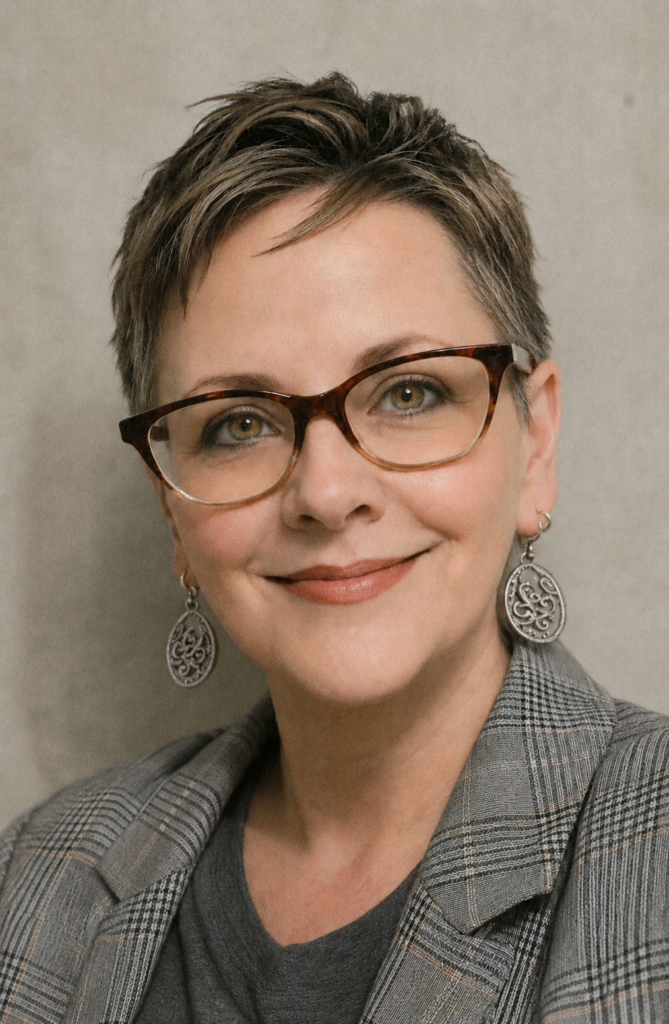
Kate Soper, PT, DBA, MS
Kate Soper, PT, DBA, MS, COMT, serves as Assistant Program Director and Assistant Professor in the Residential Doctor of Physical Therapy program at the University of St. Augustine for Health Sciences in St. Augustine, Florida. She is dedicated to fostering empathy and professional identity formation in the next generation of physical therapists. Dr. Soper earned her degree in Physical Therapy from the University of Scranton, her Master of Science in Health Services and Wellness Promotion from Independence University, and her Doctor of Business Administration from California Intercontinental University. With a career spanning clinical practice, leadership, and higher education, she brings a compassionate perspective to the work of rehabilitation, shaped by lived experiences across both professional and personal roles in care.

This work is licensed under a Creative Commons Attribution 4.0 International License.