Integrating Community-Based Learning in Speech-Language Pathology Education: A Quality Improvement Initiative

doi:10.18737/0607654901

AMA Citation: Richardson K, Johnson J, Cubine AG. Integrating community-based learning in speech-language pathology education: a quality improvement initiative. J Hum Rehabil. 2026. doi:10.18737/0607654901

Kelly Richardson, Ph.D., CCC-SLP & Jamie Johnson, CCC-SLP & Anna Grace Cubine, M.S.

Table of Contents

Abstract

Overview: Community-based learning projects are experiential learning tools that promote skill development and support the integration of theoretical and clinical experiences for students. Their role, however, in speech-language pathology (SLP) education remains underexplored.

Purpose: This quality improvement (QI) study examined the attitudes and learning experiences of graduate SLP students who participated in a 6-week community-based choral singing program for adults with neurogenic communication impairment.

Methods: Sixteen graduate SLP students participated in a choral rehearsal and wrote guided reflections addressing personal growth, educational development, professional development, and civic learning. The prompts were informed by the DEAL and ICE frameworks. Qualitative data were analyzed using iterative coding to identify recurring themes.

Results: The research team identified 5 central themes: 1) personal and clinical skill development, 2) advocacy, 3) connection, 4) assumptions and stigma, 5) social and community engagement. The students expressed positive attitudes toward community-based projects and described the activity as a valued component of their educational training.

Conclusions: As a QI initiative, this project demonstrates how community-based projects can support SLP curricula by enhancing student learning, fostering empathy toward patients and their caregivers, and promoting professional competencies essential for clinical practice. These preliminary findings underscore the potential value of integrating experiential, community-based projects into SLP education.


Overview

In the education and clinical training of graduate students in speech-language pathology (SLP) programs, instructional methods often involve imparting scientific knowledge and technical skills through didactic or hands-on instruction, and periodic assessment of student learning. In health-professions education, technical skills (eg, diagnostic procedures, treatment techniques) are often distinguished from non-technical skills (eg, counseling, cultural humility, professionalism). While both domains are critical, traditional curricula tend to emphasize technical skill development, leaving fewer structured opportunities for non-technical skill development. The development of non-technical skills, such as counseling and communication, however, may best be supported through experiential learning opportunities that require the application of these skills in real-life experiences.1,2

Although students begin developing non-technical skills during clinical rotations, community-based learning can provide intentional opportunities to practice these skills prior to, or alongside, clinical placements. Importantly, these experiential learning opportunities serve as a bridge between their classroom learning and clinical rotations, offering students the chance to apply professional competencies in community-based settings. Community-based projects, although sometimes conflated with service-learning, are collaborative partnerships designed to meet community needs while simultaneously enriching student learning.


Benefits of Humanities-Based Community Programs

Community programs contribute positively to the communities they serve, fostering mutual benefits through improved service delivery and stronger community relationships. Many community-based initiatives in SLP intersect with the humanities, such as music and art, which have long been recognized as powerful modalities for supporting both therapeutic outcomes3,4 and the development of students’ professional identity and values.5 Humanities-based experiences encourage students to engage with human expression and identity, thereby deepening their sense of empathy, cultural humility, and patient-centered communication.6,7 In this way, humanities-informed community projects, such as choral singing, extend beyond technical skill-building to enrich graduate students’ holistic professional development.

Integrating a community-based approach into the SLP curricula is also consistent with “person-centered health care,” a policy framework proposed by the World Health Organization, which supports the integration of community-based training into allied health education.8


SLP Students and Community-Based Projects

In physical therapy education programs, students have reported positive attitudes toward community-based projects, describing these experiences as valuable components of their early practice-based learning.9,10 Such projects have been shown to enhance professional values such as altruism, compassion, and integrity,11 and deepen the students’ appreciation for interprofessional relationships, patient perspectives, and the influence of real-life contexts on care.12

While the use of community-based projects has been explored in medical and other allied health professions,9,13,14 it remains understudied in SLP education. Emerging work in this area has begun to address this gap, with recent findings indicating that community-based practice can foster professional competencies and provide opportunities for students to apply clinical knowledge in authentic, community-centered contexts.15

The rationale for this project is grounded in Kolb’s Experiential Learning Theory,16 which posits that knowledge is created through experience. By embedding such experiences in the curriculum, programs can create intentional opportunities for students to integrate practical, interpersonal, and academic learning. In this project, graduate SLP students engaged in Kolb’s stage of reflective observation,16 critically examining their experiences with a community-based choir to deepen their understanding of motor speech disorders and voice impairment and inform their future clinical practice.


Purpose

The present study examined the attitudes and learning experiences of graduate SLP students following their involvement in a community-based choral singing group. The choir was designed for adults with neurological impairments, including Parkinson’s disease, traumatic brain injury, dementia, and post-stroke aphasia, to help mitigate the social isolation commonly experienced after diagnosis.17-19 In recent years, the use of choral singing to promote physical and psychosocial well-being has gained increasing attention, with studies reporting increased social connectedness, improved mood, and greater engagement among participants with Parkinson’s disease,20-24 post-stroke aphasia,21,25 traumatic brain injury,26 and dementia.27,28 In addition to these benefits, community-based initiatives, such as choral singing, provide graduate students with experiential learning opportunities that extend traditional educational training, fostering professional competencies and awareness of the broader role of SLP professionals.


Methods

This project aligns with the 2024 American Speech-Language-Hearing Association strategic pathway, which includes the transition to a competency-based education framework to improve the professional skills and the quality of care provided by SLP practitioners.


Ethical Oversight

This project was conducted as part of a course-based educational improvement initiative and aligned with the Standards for Quality Improvement Reporting Excellence (SQUIRE) guidelines29 for quality improvement (QI) reporting. At the time of data collection, the activity was not classified as human subjects’ research under institutional policy and did not require review by an internal review board. All student reflections were collected for internal program evaluation, subsequently de-identified, and analyzed for themes relevant to pedagogical development. No identifiable student information is reported.


Student Participants

Sixteen first-year graduate students enrolled in the SLP program at an American Speech-Language-Hearing Association-accredited university voluntarily participated in this project. Participation in the community-based choral singing group was not a course requirement, nor was it linked to course credit. Students elected to participate as part of a program-supported experiential learning opportunity.

At the time of their involvement, the students were concurrently enrolled in courses on voice and motor speech disorders. Student participation in the community-based choir was strategically integrated into the curriculum to bridge their theoretical knowledge of voice and motor speech disorders with practical clinical experience.


Choral Program Overview

The choir in this program was formed through collaboration between the graduate SLP program and local community organizations. Recruitment targeted adults with neurological communication impairments and their caregivers, with participation framed as voluntary and recreational.

Group members varied in their prior musical backgrounds, and most consistently attended the 6-week program. The program was developed to:

  • Foster social engagement and a sense of community among individuals with neurological disorders.
  • Provide graduate students with a hands-on, community-based learning experience aligned with their coursework in voice and motor speech disorders.


Choir members and graduate students attended weekly rehearsals at a community-based center. Choir members included caregivers, and persons with Parkinson’s disease, post-stroke aphasia, dementia, and traumatic brain injury. Each rehearsal included breathing and vocal exercises, unison singing, and two-part harmonies. The choir was led by an SLP practitioner with expertise in voice disorders and professional vocal training.


Student Reflections

Due to student interest and site-level capacity constraints, each student attended one choir rehearsal during the 6-week program and submitted a one-page written reflection within 48 hours of participation. Reflection prompts were structured using the Describe, Examine, Articulate Learning (DEAL) and Ideas, Connections, Extensions (ICE) frameworks to guide students to critically analyze their experiences in relation to personal growth, academic knowledge, professional competencies, and civic engagement.


Framework and Reflection Prompts

This project was grounded in experiential and transformative learning theories.


Experiential learning emphasizes the importance of authentic, real-world experiences in fostering professional development.16

Transformative learning extends this by encouraging learners to question their assumptions, reconsider prior perspectives, and adopt new perspectives that may shape their professional identity.30

Together, these frameworks guided the design of our reflection activity, which aimed not only to encourage students to describe their experiences, but also to challenge their assumptions about individuals with voice and motor speech disorders.

To operationalize these frameworks, we used 2 established reflection models: the DEAL31 model and the ICE32 model. The DEAL model encourages students to critically analyze their experiences through prompts that guide them to Describe, Examine, and Articulate their Learning. This approach goes beyond summarization, prompting students to reflect within a framework of specific learning objectives. The ICE model was incorporated to support transformative learning as it prompts students to identify their ideas (Ideas); connect them with prior knowledge or experiences (Connections); and extend their learning into new contexts (Extensions). Together, these models provided complementary scaffolding that encouraged students to engage with their experience, connect the experience to academic and professional knowledge, and consider how these insights might shape their evolving professional identity.

Students were guided by the following reflection prompts:

  • What expectations/assumptions did you enter the experience with? (ICE)
  • What specific elements of your academic training (theories, concepts, ideas, readings, models, etc.) relate to this experience? (ICE)
  • Express what you learned from this experience. (DEAL)
  • What are your thoughts on the role of the speech-language pathologist in developing and supporting community engagement and well-being? (DEAL)
  • Describe the personal and/or professional skills that you would like to develop in light of the experience. (ICE, DEAL)


Manual Coding of Student Reflections

The analysis of student reflections followed a structured analytic approach involving data reduction, data grouping, and the formation of concepts.33 Two graduate research assistants, in an advanced year of study, independently reviewed all reflections and conducted preliminary coding to identify core ideas. To reduce potential bias, the graduate research assistants did not participate in the choir sessions, and they did not have interaction with the student participants.

Through data grouping, these core ideas were organized into preliminary clusters that highlighted patterns and potential themes across reflections. During this phase, the research team observed that the themes naturally clustered into 2 domains:

  1. Students’ reflections on their own growth and skill development as future clinicians.
  2. Their observations about the experiences and needs of the community participants.


These domains were subsequently labeled clinician-centered and patient-centered themes, respectively. All coded data were reviewed against this framework to ensure internal consistency, and consensus was reached among the coding team that this categorization best reflected the balance between student learning outcomes and participant-centered insights.

From this process, 5 key themes were identified across the 2 domains. To ensure the reliability and rigor of these findings, a third independent coder reviewed the data and engaged in confirmatory coding. Any disagreements about theme assignment were resolved through consensus discussions; an audit trail of coding decisions was maintained.


Results

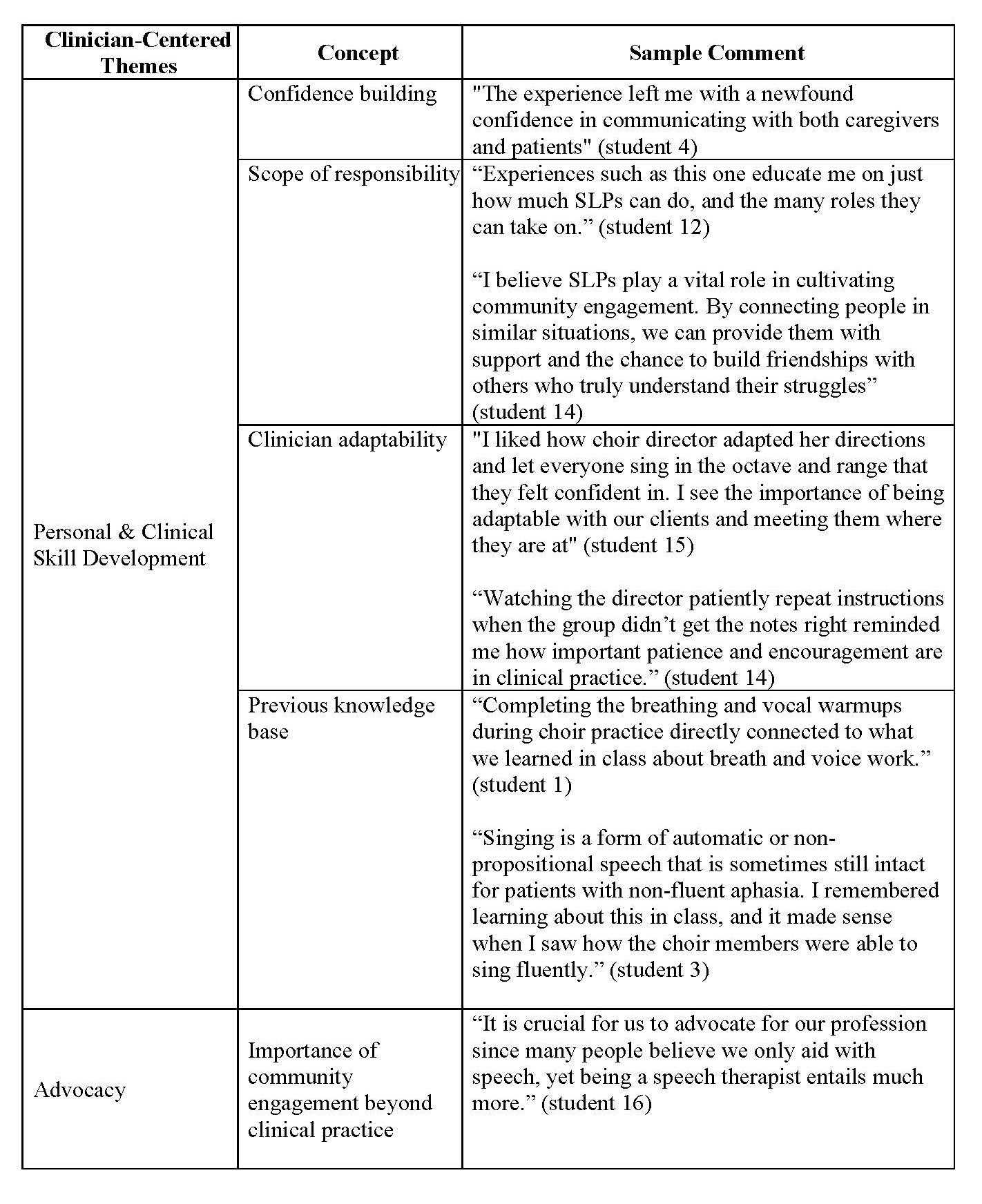
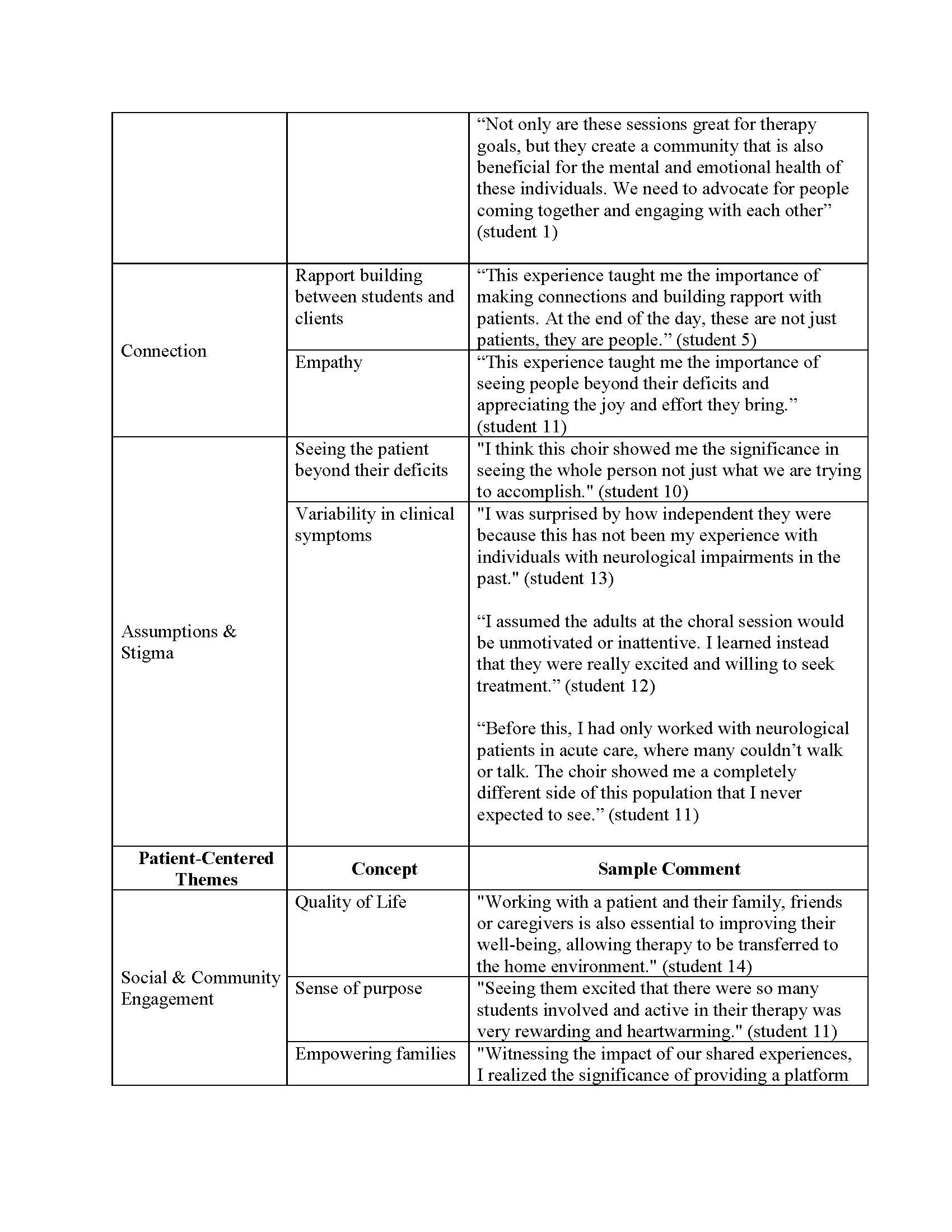
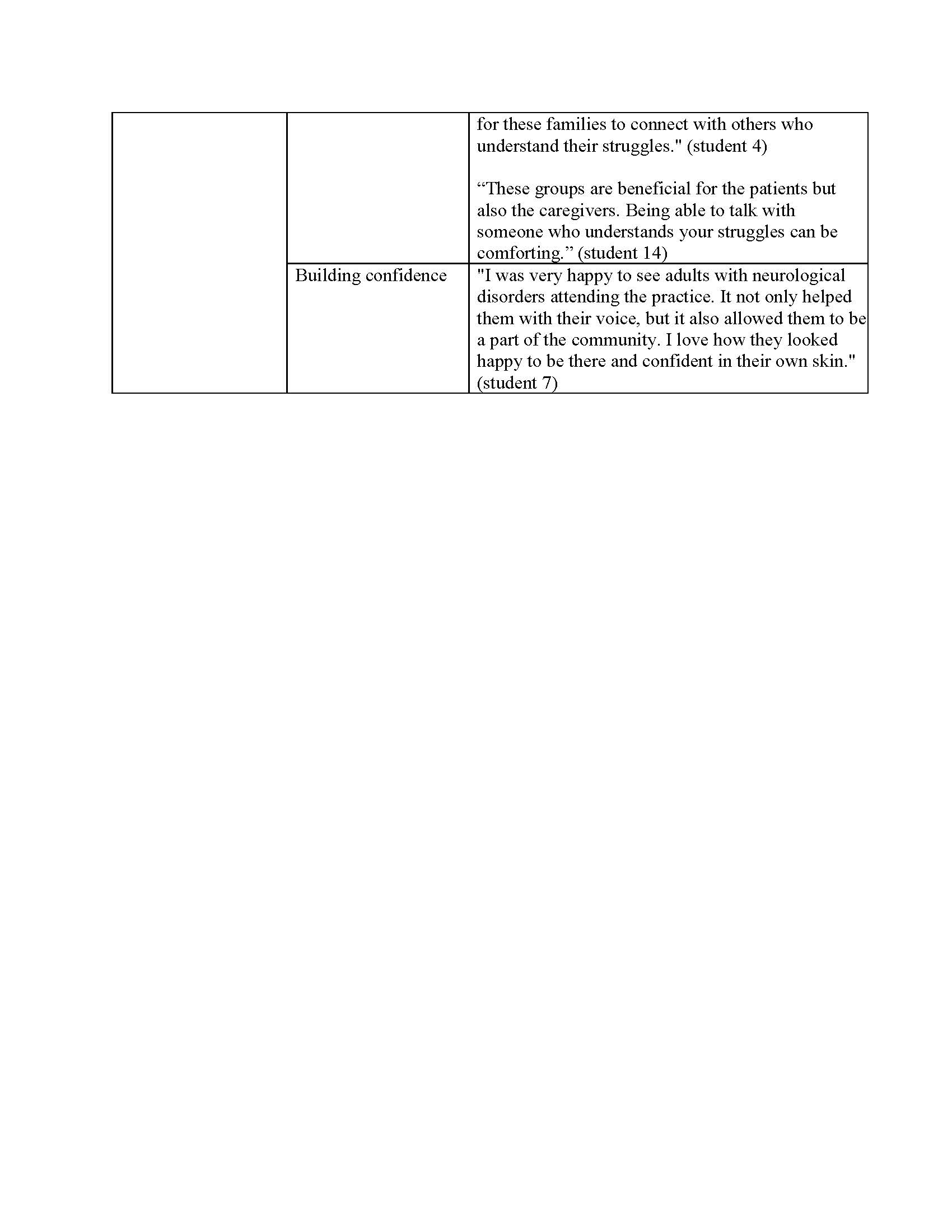
Qualitative analysis of the 16 student reflections yielded 5 overarching themes, which were organized into 2 primary domains: clinician-centered and patient-centered (Table 1).


The clinician-centered domain included themes of:

  • Personal and clinical skill development
  • Advocacy
  • Connection
  • Assumptions and stigma.

The patient-centered domain encompassed:

  • Social and community engagement.


Representative student quotes are provided in Table 1 to illustrate each theme within its respective domain.


Personal and Clinical Skill Development

Through their participation in the choir, the graduate SLP students engaged directly with individuals affected by neurological impairment and described how these encounters deepened their understanding of the real-life challenges faced by this population. Many described “feeling more confident” in their ability to interact with individuals with communication disorders and noted a stronger sense of self-awareness as a developing clinician. Students also emphasized how the experience “helped [them] see things from the patient’s perspective.”

Students noted growth in their communication skills, particularly in active listening and adapting interactions to meet the needs of others. They emphasized the value of flexibility when navigating unexpected challenges, which were routinely observed during choral rehearsals. Collectively, these experiences illustrate how community-based learning may not only foster clinical skill development, but also support the personal and professional growth of future SLP practitioners.


Advocacy

Students identified advocacy as a key learning outcome of the choir project. In their reflections, they described how working alongside individuals with communication impairment not only increased their awareness of communication and participation barriers but also highlighted the broader role of SLP practitioners. Several students noted that the experience “opened [their] eyes to the importance of speaking up for patients” and reinforced the idea that clinicians are also advocates for inclusion and accessibility. Students emphasized that advocacy was emerging as an integral part of their professional identities.

These responses demonstrate how participation in community-learning projects may play an important role in shaping compassionate, client-centered clinicians who are committed to advancing equity and inclusivity within their future practice.


Connection

Through these community experiences, the students observed firsthand the importance of building strong, meaningful connections not only with clients, but also with their families and support systems. In their reflections, many students emphasized how forming a bond with clients and their families deepened their understanding of the broader support networks that influence communication outcomes. Students recognized that effective therapy extends beyond individual interactions to include family, community, and cultural dynamics, noting that these connections “make therapy more personal and impactful.” They also highlighted the value of collaboration and peer support, describing how working together in the choir “reminded [them] that we are all part of a bigger team.”

Overall, students emphasized that engaging with clients in a non-clinical, community setting deepened their appreciation of the socio-cultural contexts shaping communication, and reinforced the importance of trust and rapport as foundations of effective care.


Assumptions and Stigma

Students reflected that the choir experience challenged their assumptions about individuals with communication impairments. Many acknowledged entering the project with misconceptions and described how direct interaction with participants “changed the way I think about people with communication disorders.” Several emphasized learning to see clients beyond their impairments, noting that the experience “helped [them] see the person first, not just the disorder.”

As educators, we interpreted this theme as evidence that experiential learning may provide a context for students to examine and transform attitudes that might otherwise perpetuate stigma in clinical practice. Collectively, these insights underscore the potential for community-based learning to reduce stigma, cultivate respect, and foster more patient-centered approaches to care.


Social and Community Engagement

Students reflected on how the choir experience connected their learning to broader issues of social responsibility and civic engagement. Many students described the choir as not only an opportunity to apply their professional skills, but also as a way to “give back to the community” and contribute to the participants’ well-being. Many students emphasized that participation in the choir reinforced their belief that SLP practitioners play an important role in promoting inclusivity, fostering social participation, and engaging in interdisciplinary collaboration. These reflections highlight how students began to situate their professional identity within a larger civic framework, with one student noting “it showed me that being an SLP [practitioner] means being part of something bigger than the clinic.”


Discussion

Through their reflections, the students highlighted 5 interrelated themes (personal and clinical skill development, advocacy, connection, assumptions and stigma, and social and community engagement) which align with the core professional competencies for the SLP field. As educators, we viewed this experiential project as a valuable opportunity for students to connect their classroom knowledge with the human aspects of clinical care.

These preliminary findings suggest that participation in community-based projects, such as choral singing, can extend learning beyond the classroom and foster the non-technical competencies essential to professional practice. Embedding structured, humanities-informed experiences into graduate training may enrich education, strengthen community partnerships, and prepare clinicians who are culturally responsive and attuned to the broader contexts of care.


Limitations and Future Directions

Several study limitations are acknowledged. First, participation in the community-based choir was voluntary and limited in scope, with some students attending only a single rehearsal.

As a result, the depth of experiential exposure was constrained, and outcomes may differ for students engaged in longer or repeated community-based experiences.

Second, data collection relied exclusively on students’ written reflections. While reflective writing offers valuable insights into students’ perceptions, the use of self-reported data can be influenced by external factors, such as differences in writing ability and expressive language skills, and perceived course expectations.

In addition, although steps were taken to ensure coding reliability through independent review and consensus, qualitative analysis remains inherently interpretive. Future studies should triangulate student reflections with additional data sources, such as faculty observations, community participant feedback, or interviews, to provide a more comprehensive perspective and strengthen the credibility of the findings.

Third, the sample was limited to a single cohort of 16 female, first-year graduate students from one university, which limits the generalizability of the results to other training programs and more diverse student populations.

Finally, the project was designed as a quality-improvement initiative within an academic program and not as a longitudinal research study; thus, the findings do not address the long-term impact on students’ non-technical skill development.

Future research should address these limitations by incorporating multi-institutional samples, recruiting diverse student cohorts, extending participation across multiple sessions, and including perspectives from additional stakeholders such as faculty, supervisors, and community members. Longitudinal follow-up could also explore whether early community-based experiences contribute to measurable changes in professional competencies.


Conclusions

In summary, our qualitative analysis suggests that community-based programming holds promise for supporting the personal and professional development of graduate SLP students. Continued exploration of experiential learning opportunities is warranted to better understand how such initiatives contribute to preparing socially-responsible clinicians. The themes identified in this study highlight the importance of further examining how community-based experiences can be meaningfully integrated into SLP education to enhance student learning, improve service delivery, and support our community.

References

  1. Lane IF. Professional competencies in health sciences education: from multiple intelligences to the clinic floor. Adv Health Sci Educ. 2010;15(1):129-146. doi:10.1007/s10459-009-9172-4
  1. Thistlethwaite JE. Interprofessional education: implications and development for medical education. Educación Médica. 2015;16(1):68-73. doi:10.1016/j.edumed.2015.04.
  1. Tamplin J, Clark IN, Lee YEC, Baker FA. Remini-Sing: A feasibility study of therapeutic group singing to support relationship quality and wellbeing for community- dwelling people living with dementia and their family caregivers. Front Med. 2018;5:245. doi:10.3389/fmed.2018.00245
  1. Street AJ, Magee WL, Odell-Miller H, Bateman A, Fachner JC. Home-based neurologic music therapy for upper limb rehabilitation with stroke patients at community rehabilitation stage—a feasibility study protocol. Front Hum Neurosci. 2015;9. doi:10.3389/fnhum.2015.00480
  1. Trede F. Researching professional identity development: an arts-informed approach. In: Baik C, Kahu ER, eds. Research Handbook on the Student Experience in Higher Education. Edward Elgar Publishing; 2023:312-324. doi:10.4337/9781802204193.00031
  1. Wald HS, McFarland J, Markovina I. Medical humanities in medical education and practice. Med Teacher. 2019;41(5):492-496. doi:10.1080/0142159X.2018.1497151
  1. Ousager J, Johannessen H. Humanities in undergraduate medical education: a literature review. Acad Med. 2010;85(6):988-998. doi:10.1097/ACM.0b013e3181dd226b
  1. People-Centred Health Care: A Policy Framework. World Health Organization, Western Pacific Region; 2013.
  1. Qutishat D, Muhaidat J, Mohammad M, Okasheh R, Al-Khlaifat L, Al-Yahya E. Exploring attitudes of physiotherapy students towards a community-based project used as a learning tool. Physiother Theory Pract. 2021;37(1):115-125. doi:10.1080/09593985.2019.1619209
  1. Arena SK, Heeg S, Lewis A, Matero E. Doctor of Physical Therapy students’ perceptions of engagement in service learning with scouts: a descriptive study. Pediatr Phys Ther. 2022;34(2):239-244. doi:10.1097/PEP.0000000000000871
  1. Seifer SD. Service-learning: community-campus partnerships for health professions education. Acad Med. 1998;73(3):273-277. doi:10.1097/00001888-199803000-00015
  1. McGehee WF, Dunleavy K, Blue AV, Stetten NE, Black EW. Physical therapist students’ perceptions: learning from a community-based, client-focused, interprofessional learning experience. JOPTE. 2018;32(1):70-76. doi:10.1097/JTE.0000000000000025
  1. Ballantyne K, Porter KR, Bogdanovski K, Lessans S, Pasarica M. Cultural sensitivity and learning about healthcare equity for the underserved: experiential learning in a student-run free clinic. Med Sci Educ. 2021;31(2):381-385. doi:10.1007/s40670-021-01235-9
  1. Ernstzen DV, Schmutz AM, Meyer IS. Chapter 7: The learning experiences and perspectives of physiotherapy students during community-based education placements. In: Transformation of Learning and Teaching in Rehabilitation Sciences: A Case Study from South Africa. Human Functioning, Technology and Health. AOSIS; 2022.
  1. Thao SK, Graybeal L, Nam Y, Hearn B. Beyond the Classroom: Evaluating the impact of community-based practice on speech–language pathology undergraduate students through the lens of Fink’s Taxonomy. J Experi Educ. Published online August 28, 2025:10538259251369837. doi:10.1177/10538259251369837
  1. Kolb DA. Experiential Learning: Experience as the Source of Learning and Development. 2nd ed. Pearson Education, Inc; 2015.
  1. Ahn S, Springer K, Gibson JS. Social withdrawal in Parkinson’s disease: a scoping review. Geriatr Nurs. 2022;48:258-268. doi:10.1016/j.gerinurse.2022.10.010
  1. Moss B, Behn N, Northcott S, et al. “Loneliness can also kill:” a qualitative exploration of outcomes and experiences of the SUPERB peer-befriending scheme for people with aphasia and their significant others. Disabil Rehabil. 2022;44(18):5015-5024. doi:10.1080/09638288.2021.1922519
  1. Salas CE, Rojas-Líbano D, Castro O, et al. Social isolation after acquired brain injury: exploring the relationship between network size, functional support, loneliness and mental health. Neuropsychol Rehabil. 2022;32(9):2294-2318. doi:10.1080/09602011.2021.1939062
  1. Hersh D, Kong SJ, Smith J. It’s quite good fun : a qualitative study of a singing/songwriting programme for people with Parkinson’s disease and their spouses. Intl J Lang & Comm Disor. 2023;58(6):2103-2116. doi:10.1111/1460-6984.12926
  1. Fogg-Rogers L, Buetow S, Talmage A, et al. Choral singing therapy following stroke or Parkinson’s disease: an exploration of participants’ experiences. Disabil Rehabil. 2016;38(10):952-962. doi:10.3109/09638288.2015.1068875
  1. Good A, Pachete A, Gilmore S, Russo FA. Comparing the biopsychosocial impact of group singing and yoga activities in older adults living with Parkinson’s disease. Sci Rep. 2025;15(1):26713. Published 2025 Jul 23. doi:10.1038/s41598-025-09200
  2. Tamplin J, Morris ME, Marigliani C, Baker FA, Noffs G, Vogel AP. ParkinSong: outcomes of a 12-month controlled trial of therapeutic singing groups in Parkinson’s disease. JPD. 2020;10(3):1217-1230. doi:10.3233/JPD-191838
  1. Hendry N, Lynam DS, Lafarge C. Singing for wellbeing: formulating a model for community group singing interventions. Qual Health Res. 2022;32(8-9):1399-1414. doi:10.1177/10497323221104718
  1. Tamplin J, Baker FA, Jones B, Way A, Lee S. ‘Stroke a Chord’: The effect of singing in a community choir on mood and social engagement for people living with aphasia following a stroke. Wood RLl, ed. NRE. 2013;32(4):929-941. doi:10.3233/NRE-130916
  1. Baker F, Wigram T, Gold C. The effects of a song-singing programme on the affective speaking intonation of people with traumatic brain injury. Brain Inj. 2005;19(7):519-528. doi:10.1080/02699050400005150
  2. Dawudi M, Schall A, Tesky VA, Pantel J. The psychosocial and physiological effects of choir-singing in people with dementia: a pilot study. GeroPsych. 2024;37(1):3-13. doi:10.1024/1662-9647/a000323
  3. Smith AP, Kampen R, Erb T, MacDonald SWS, Sheets DJ. Choral singing and dementia: exploring musicality as embodied and relational accomplishment. J Aging Stud. 2022;63:101077. doi:10.1016/j.jaging.2022.101077
  1. Ogrinc G, Davies L, Goodman D, Batalden P, Davidoff F, Stevens D. SQUIRE 2.0 (Standards for QUality Improvement Reporting Excellence): revised publication guidelines from a detailed consensus process. BMJ Qual Saf. 2016;25(12):986-992. doi:10.1136/bmjqs-2015-004411
  2. Mezirow J. Perspective transformation. Adult Educ. 1978;28(2):100-110. doi:10.1177/074171367802800202
  3. Ash SL, Clayton PH. Generating, deepening, and documenting learning: the power of critical reflection in applied learning. J Appl Learn Higher Educ. 2009;1(1):25-48.
  4. Mitchell T. Traditional vs. critical service-learning: engaging the literature to differentiate two models. Mich J Commun Serv Learn. 2008;14(2):50-65.
  5. Anandarajan M, Hill C, Nolan T. The fundamentals of content analysis. In: Practical Text Analytics. Vol 2. Advances in Analytics and Data Science. Springer International Publishing; 2019:15-25. doi:10.1007/978-3-319-95663-3_2

About the Authors

Kelly Richardson, Ph.D., CCC-SLP

Kelly Richardson, Ph.D., CCC-SLP, is an Associate Professor in the Division of Speech-Language Pathology at the Medical University of South Carolina. Her clinical research program focuses on speech, voice, and respiratory changes associated with neurologic disease, the effectiveness of dysarthria interventions in real-world clinical settings, and factors that influence treatment adherence and long-term maintenance of therapeutic gains. Her work also includes the development of digital health and technology-based interventions designed to support communication treatment adherence, home practice, and sustained communication outcomes in individuals with Parkinson disease. She has served as principal investigator and collaborator on federally-funded research projects and is actively engaged in interdisciplinary collaborations with neurology, rehabilitation sciences, engineering, and human-centered computing. Clinically, she works with individuals with Parkinson disease and ALS, providing community-based voice therapy as well as voice and message banking services to support communication participation.

Jamie Johnson, CCC-SLP

Jamie Johnson is a CCC-SLP based out of Savannah, GA. She is a graduate of the College of Charleston with a Bachelor of Science in Special Education. Additionally, she received her Master of Science in Speech Language Pathology from the Medical University of South Carolina. She continues her work with individuals with movement disorders in the adult population as a Medical SLP in the acute care setting at St. Joseph’s Candler Hospital in Savannah.

Anna Grace Cubine, M.S.

Anna Grace graduated from the Medical University of South Carolina in 2024 with a Masters of Science in Speech-Language Pathology, and she holds a Bachelor of Arts in Psychology from the University of South Carolina. Since then, she worked in a pediatric outpatient clinic and has recently transitioned into her new role as the primary SLP at a full continuum of care senior living community. She works with assisted living, memory care, acute rehab, and long term care patients diagnosing and treating a variety of cognitive, language, and swallowing disorders and deficits.