

To Read
The Measure by Nikki Erlick
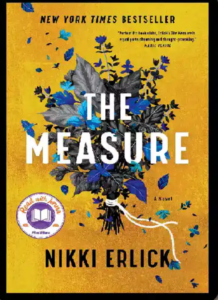
In her debut novel, Nikki Erlick seamlessly intertwines the perspectives of eight individuals in a fictional yet incredibly thought-provoking story about how humans would live their lives if they were given the chance to know their age at death. The world that Erlick creates is more realistic than it is dystopian, despite the fact that every person on Earth is delivered a box that contains a string measuring the length of their life. What every person chooses to do with this knowledge is different, and the story inspires readers to ponder what choices they would make in this situation.
Would you want to open your box and know how many years you had left? Would you want to know the lifespan of your family and friends? Would you change the way you lived based on the length of your string? Erlick’s work is wonderfully and frighteningly complete, as she delves into possible societal responses to the new information. She explores the need for support groups for those with short strings as they navigate their new “diagnosis,” the modified medical treatment they receive due to their known limited chance of survival, and the way that neighbors and strangers alike start to perceive the quality of life of “short stringers.” Highlighting both the beautiful and unpleasant sides of human nature, The Measure is sure to inspire the reader to think differently about their “one wild and precious life.”1
Putting It Into Practice:
- Many people in rehabilitation settings are grappling with the finitude of their lives with progressive or terminal diagnoses.
- Reflecting on this novel helps us think about what really matters in our lives, and how we can maximize our remaining time doing the things we love.
Maame by Jessica George

At the mere age of 25, Maddie Wright is tasked with being the primary care partner for her father during his last years of living with Parkinson’s disease. Maddie’s mother chooses to live in her home country of Ghana, only visiting when it suits her needs, and her brother travels the world for his “job,” occasionally visiting Maddie to ask for financial assistance. This compassionate coming-of-age novel showcases the everyday hardships that a young care partner must handle as she’s just beginning to experience what it means to live life for herself. Maame (meaning “mother” or “woman” in Twi), grapples with the way in which family dynamics and individual perspectives change when moving through loss.
Putting It Into Practice:
- Through this story we see an intimate portrayal of a care partner’s daily experience—highlighting the complex emotional and physical demands of supporting another person while simultaneously navigating one’s own life.
- The narrator’s position as a care partner illuminates the oft-overlooked perspective of someone living adjacent to a person in need, reminding us to incorporate multiple viewpoints when working to maximize the quality of life of those around us.
To Listen
We Can Do Hard Things: How to Love Your Body Now, With Carson Tueller
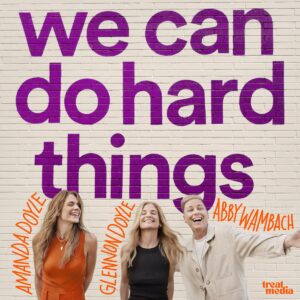
Carson Tueller, an activist, speaker, and advocate for the queer and disabled communities, sits down for an interview with Glennon Doyle and Abby Wambach on their aptly-titled podcast, We Can Do Hard Things. Tueller provides listeners with the story of the accident that left him paralyzed from the chest down at 23, and recounts what it was like to leave behind his Mormon faith and come out as gay, all in the span of a few years. This entertaining, heart-warming, and brutally honest story inspires listeners to dig deep and think about what it would mean to live as their most authentic selves.
Tueller admits that questions surrounding his injury such as, “What if this never happened?” and “What if I didn’t have chronic pain?” still arise. However, he shares that he has found ways to live a “powerful, self-expressed life inside of a lot of suffering.” He credits a portion of this growth to discourse and writing. Tueller talks about the transformation that he went through when his younger sister prompted him to start thinking about the day of his accident as his “Day of Rebirth” as opposed to his “Death-day.” This conversation reminds us that adjusting the lens through which we view the world can change the trajectory of our life.
Putting It Into Practice
- People in rehabilitative spaces have often experienced traumatic events that can be difficult to process and discuss.
- Creating environments where people feel open to sharing their experience requires open-ended questions, affirmative language, and reflective listening.
- When we understand where someone has come from, we can better help them chart a path forward while encouraging them to continue to pursue their dreams, even if that path differs from what was expected.
Set the Pace – NYRR Podcast: Pushing the Limits of Adaptive Training, With Peloton Instructor Logan Aldridge

Logan Aldridge, a Peloton instructor and adaptive training specialist, believes that “the day [he] had his accident was the best day of [his] life.” At 13, Aldridge lost his (dominant) left arm, an event he credits as the “start of an incredible journey.” Throughout the telling of his story, he shares the importance of expressing gratitude for all that we have rather than mourning what we’ve lost. He is wonderfully relatable as he recounts associating physical disability with sickness prior to his injury, and describes the moment in which he vowed never to do so again. Being able to go into the gym and think about how he would need to adapt certain exercises or activities so that he could participate (always questioning how, not if he could accomplish his goals) led him to his role at Peloton, where he now empowers athletes around the world to achieve their dreams while embracing adversity.
Putting It Into Practice:
- Challenging ourselves to practice gratitude for the things that we have and all that we are capable of, can often be the driving force to move us through difficult times. Positive energy is infectious and may encourage others to take a more optimistic outlook on life as well.
- This podcast reminds us that accessibility can look different for many people, and that we shouldn’t give up on adapting the world until we have created a space where everyone can flourish.
To Appreciate
Experiencing the Super-Human: A Reflection by Camille Hoke
While on my third terminal clinical experience at Kennedy Krieger Institute in Baltimore, Maryland, I spent a free Saturday exploring the American Visionary Art Museum. Housed in this museum at the time of my visit was an exhibit titled, Good Sports: the Wisdom and Fun of Fair Play. As a Doctor of Physical Therapy student, a lover of all things sport, and someone with a passion for pediatrics and incorporating more play into everyday life, I was drawn to this extensive collection.
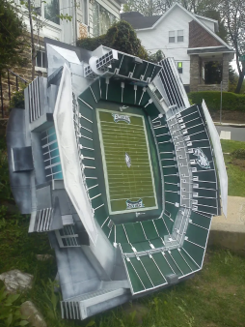
Planted in the middle of one of the larger rooms that contained artwork in nearly every medium you could think of (painting, quilting, dioramas, cleverly-recycled vintage pinball machines, etc.) was a massive sculpture of the Lincoln Financial Field in Philadelphia, Pennsylvania. This beautifully-constructed piece of architecture was made by Kambel Smith, a self-taught artist known to some as the “Cardboard Genius.” This title was given to Kambel for his ability to create architecturally-accurate and intricate sculptures of historic landmarks using mainly cardboard and paint.
There is no doubt that Kambel is gifted in the way that he can produce these large-scale sculptures without the use of any measuring tools, but rather than “genius,” Kambel chooses to describe himself as a person born with “super-human abilities”—which he credits to his autism diagnosis.
Below the stunning sculpture sat a plaque describing Kambel, including the following quote highlighting both his passion and his past: “Although my journey has been a complicated one, it gives me peace of mind and heart to realize I have always been an artist. The spoken word has never been my preferred method of communication, so my challenge is to create art that expresses my passion and clearly speaks to others. This challenge is met by an inexhaustible desire to recreate the world around me through my lens.”
As healthcare providers, we are constantly seeking new ways to shape the world into a home that all patients and all people feel safe in. Rather than forcing humans into boxes and telling them to think and act and communicate in a certain way, we celebrate the virtues that make us different, and we work to create more spaces for these differences to shine. With the help of his family, that is exactly what Kambel did. Rather than communicating with spoken words, he found his own beautifully articulate way to connect with the world around him.
If that isn’t inspiring enough, Kambel’s perspective of himself as an artist with autism led to the term “autisarian,” and the eventual birth of the non-profit Autisarian Network. This organization, created by Kambel and his family, is focused on encouraging individuals with autism to build their self-confidence and connection to the world by finding their own “super-human ability.”
Visit Kambel’s personal website to view more of his work.

This work is licensed under a Creative Commons Attribution 4.0 International License.