

Beyond the Algorithm: Where Curiosity Begins
doi: 10.18737/0607903723
AMA Citation: Nguyen K. Beyond the Algorithm: Where Curiosity Begins. J Hum Rehabil. 2026; Fall. DOI: 10.18737/0607903723
Congratulations to Doctor of Physical Therapy Student, Kim Nguyen, (University of Florida), finalist of the annual Student Essay Contest, co-sponsored by the American Counsel of Academic Physical Therapy (ACAPT) and the Journal of Humanities in Rehabilitation (JHR). The ninth in an annual series, this national contest offers a creative opportunity to ignite critical reflection in Physical Therapy students across the nation to support holistic approaches to patient care. This year’s essay prompt was:
What experience, in the classroom or the clinical setting, has challenged your assumptions and deepened your sense of curiosity as a physical therapist? How has this experience shaped your understanding of what it might take to remain deeply curious, even after years of clinical practice?
One definition of curiosity is “an eager desire to learn; a deep interest in others’ concerns.” In rehabilitation, curiosity might be understood as the work of resistance against assumptions, biases, or textbook answers when relating to patients, peers, or yourself as a learner. It can foster deeper understanding, empathy, and more holistic care.
Table of Contents
The first thing I noticed was her silence. Not the gentle “quiet” that settles comfortably between people, but the kind that fills a room the way fog fills a road—dense and obscuring. She sat on the edge of the treatment table, hands braced against her lower back as if the pain might escape if she loosened her grip. The chart read “chronic low back pain,” but her eyes told a very different story.
As a student physical therapist, I had been trained to identify patterns, not chase mysteries. The patient experiences pain with flexion? Assess the joint. Pain with weight-bearing? Evaluate mechanics. However, this patient did not fit neatly into any algorithm. Each test result seemed to contradict the last. Even before I touched her, she winced and tensed as though she expected the examination to hurt. Quickly I realized that all of the tidy theories I learned when assessing patients in the clinic began to feel like fragile glass—clear and carefully constructed, yet easily shattered by the realities unfolding before me.
Humbling myself to the recognition that I was unclear about what to do next, or what was happening with this patient, I said to her, “Tell me what this pain feels like.”
She hesitated, then exhaled: “It feels like my body remembers things I’d rather forget.”
Finding the Story Behind the Pain
In that moment, I realized I wasn’t just treating a person’s spine; I was intersecting with an individual’s story—a story shaped by childhood expectations, years of minimizing discomfort, and a lifetime of believing that pain must be hidden or ought to have been earned. As a PT student, I had learned about nociceptors and neural pathways, but I had never witnessed how guilt, fear, and memory could wrap themselves around a joint more tightly than any ligament. This was the day I learned that pain is not simply felt; it emerges from the interaction of physical sensations, interpretation, and lived experience.
From this newly realized vantage point, I did something unexpected; I put down my goniometer. I asked more questions. I listened to the pauses between her words. I watched the way she braced before she breathed. The more she spoke, the clearer the clinical puzzle pieces rearranged themselves into a cohesive picture. Her pain wasn’t “random” or inexplicable; it was serving a purpose. As I listened to her describe her fears, stressors, and previous experiences with pain, I began to understand that her symptoms reflected more than tissue irritation alone.
Working Toward Trust
After the assessment, my approach to her course of treatment changed from what I had originally intended. I stopped focusing on finding the perfect corrective exercise and instead built sessions around physical and emotional safety, pacing, and helping her regain trust in her body and movement. Over the following weeks, as her confidence grew, her range of motion gradually improved; but what struck me most was a comment she made midway through our course of care: “I didn’t know PT could feel like therapy.”
Anchoring Therapy in Treatment
That sentence stayed with me, because in that statement resided an important truth that is not found printed on the first page of an orthopedic textbook: that physical therapists are part scientist, part coach, part detective—but most often, an empathetic and trusted presence for their patients. It is helpful to recognize that pain is not just a biological phenomenon. It is an experience shaped by upbringing, culture, stress, memory, and fear. Recognizing and integrating that into the patient care provision process requires more than rote clinical skill. It requires one to embody curiosity—the stubborn, relentless kind that refuses to settle for easy explanations for the sake of certainty or efficiency.
This clinical encounter forced me to confront my own assumptions. I had believed curiosity was something that faded with experience, slowly dulled by repetition until it softened into routine. But now, I view the role of curiosity differently. Curiosity is what keeps a physical therapist’s work alive as it protects against the pull of clinical autopilot. It undergirds the refusal to say, “I’ve seen this a thousand times,” because no patient has lived the exact same thousand days that led them to your table.
Anchoring Curiosity in Care
Years from now, when my documentation is faster and my clinical reasoning sharper, I hope this memory anchors me. I hope I still enter each session wondering, not assuming. I hope I always leave enough space and time in my evaluations for hearing the human story, not just assessing the impairments. Pain, I’ve learned, is not the enemy that physical therapists are aiming to defeat. The real enemy we need to guard against is premature certainty—the kind that prevents us from noticing what is unfolding in front of us.
My experience with this patient taught me that staying deeply curious is not considered a superfluous luxury in this profession, but rather a responsibility. Adopting a posture of curiosity may be how we help patients reveal the stories they don’t yet know how to tell, and it is how we honor the uniqueness and complexity of healing. It may be as simple as replacing “What does this pain feel like to you?” with the question: “What does this pain mean to you?” That subtle shift sometimes opens space for insights that extend beyond what is measured into what is understood—where even “silence” becomes a doorway rather than a barrier to more thoughtful clinical reasoning.
About the Author
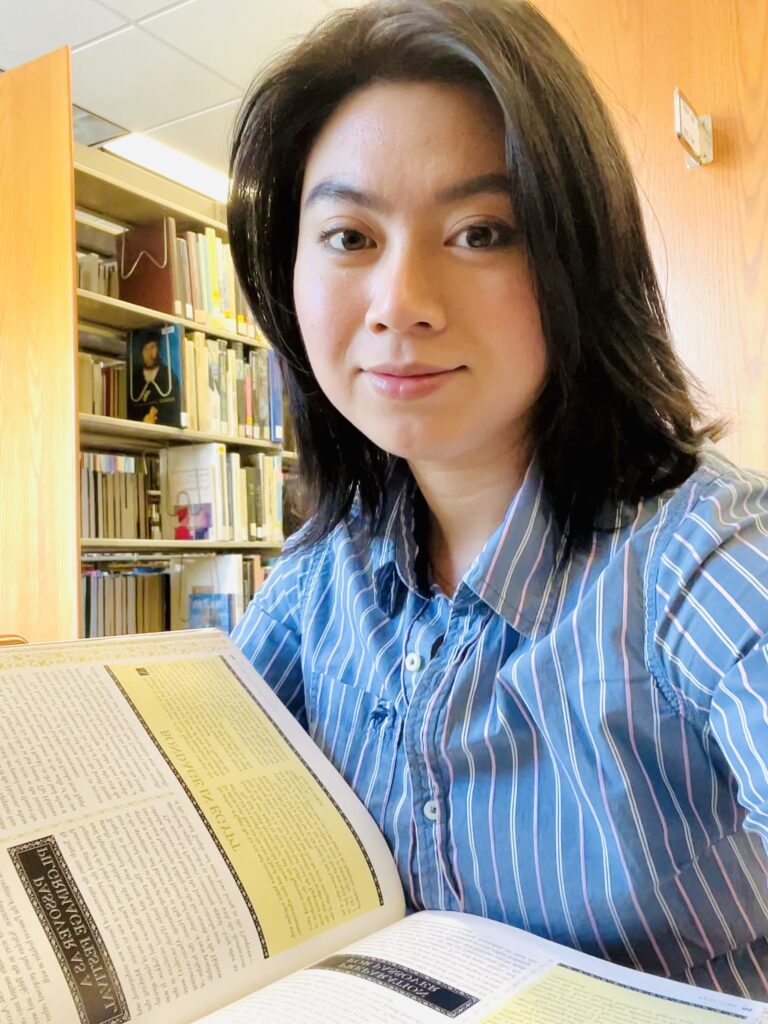
Kim Nguyen, SPT
Kim Nguyen is a Doctor of Physical Therapy student at the University of Florida (Class of 2028). Her interests include human movement, global health, clinical education, and innovative approaches to patient-centered care. Drawing from experiences in research, teaching, and cross-cultural collaboration, she is committed to leading with empathy, challenging convention, and advancing compassionate rehabilitation practice.
This work is not licensed under a Creative Commons Attribution 4.0 International License per author request. Please direct all inquiries on use to author.