

Creating Movement and Making Peace Daily With Parkinson’s
doi: 10.18737/0607690431
AMA Citation: Reichert A. Creating Movement and Making Peace Daily with Parkinson’s. J Hum Rehabil. 2026; Fall. DOI: 10.18737/0607690431
Table of Contents
One can make peace, if for only an hour or two a week, with muscles, pain, and stiffness from Parkinson’s. I find this peace in the Moving Through Parkinson’s (MTP) classes at Colorado State University’s Center for Healthy Aging. Each week, Professor of Dance Lisa Morgan and her staff develop a creative and unique exercise experience for Parkinson’s patients. These patients like me, who must move, enjoy an exercise class that includes live or recorded music. Classes are supported by the Parkinson’s Association of the Rockies, and the MTP class can be taken virtually via Zoom, or in person.
For me, the class creates a peaceful, connective space. I only attend virtually because the drive is too much. Fortunately, I can work freelance, so I have flexible hours and work from my home office. I know my symptoms are not “bad enough” to qualify for Social Security disability, but they do impact my ability or desire to drive to an office and show up in person.
A Solid Connection
The surprising effect of this class for me has been the degree of connection I feel with the group. Even though the participants come and go, the connection remains solid. I’m not sure why or how, but this class makes me aware of how others with Parkinson’s are managing through exercise. Sounds like a simple concept, but exercise can be challenging. When I connect with others in the class. I don’t feel like I’m alone, but I have people to communicate with.
This class moves at a different pace each time, and Lisa and her team are dedicated to trying new things and varying the exercise, which keeps the class from becoming stale or dull. For example, they put dots across the floor and dance around them. Now, virtually I don’t have dots, but I can improvise on my own. I don’t feel excluded; rather, it exercises my ability to create my own movement that mimics what the live class is doing.
Getting a group of adults to dance around dots on the floor is impressive and, to be honest, entertaining. I’ve got new ideas about using dowels—and better yet, pool noodles—to add some variety to daily exercise. It’s a good reminder that we can use everyday household items to help maneuver around painful symptoms.
Then, there’s the music. Some days the music is performed live; on other days, Lisa and staff use different recorded playlists. It’s hard to connect with Parkinson’s patients of various ages, but the music adds a shared experience that spans generations. Many tunes are familiar, and others are ones I haven’t heard—or at least not in many years. Rediscovering different music expands my personal frontier and helps connect me to other participants through the shared rhythms. The live version adds personality and different timing to each exercise. It helps break up the routine of exercise.
Encouragement and Creativity
In the class I feel like I’m 15 again, awkward and trying to make friends. It’s fun to watch live, and they always make sure the virtual crowd has something to do. There’s always some awkwardness or vulnerability, especially when asking questions, responding in writing, or trying new things outside my usual comfort zone. I’ve never been one to speak up, but the class makes me feel comfortable enough to embarrass myself. That’s a good thing.
Lisa encourages people to write down what they feel and then puts together some dance steps to go with it. When she asks people to share writing, you feel the air getting sucked out of the room. It’s difficult to put yourself out there. However, Lisa and the other students are encouraging. I feel good when I contribute to something. It’s meaningful to me and helps me connect with others in the group at some level.
Here is something I wrote for the class:
“Ah, Parkinson’s. The joy of it all. It’s a gift no one wants and cannot be returned without a receipt. Leave it in the road, toss it in a dumpster, or dig it out, take medications, rest, and watch it grow back and return unabated. Brief success stomping it down brings joy, a celebration of movement – much better in the mind than in reality. I go forth, dance, move, and breathe life back into this body even while it attempts to flee.
Step right, step left. Stretch and feel the hamstrings resist. Let the dance flow like a winding road following the ocean. Wind through the corners and feel free, turn, turn, and dance like only you can imagine. Move as a force against a stiffening wind, blowing dust, debris in my face. I keep thinking about dandelions. I, as a single plant, or my dance group as a cluster, sticking together.
Together we move, we resist the wind pushing us back, down. Dandelions grow strong in clusters. Their roots are thick, and they return like clockwork. The root restores itself, grows, rebuilds, cell by cell until it creates a cluster and blooms again.”
Lisa and her staff, along with class participants, contributed to creating a full choreography that included the words contributed by individuals like me in the class. Each week we’d spend 10 or 15 minutes rehearsing a set of moves and then adding more to them.
Moving Together
Imagine a group of people with their arms waving up and down, left and right like the wind blowing in your face and holding you back. We added arm movements that simulated bodies pushing against the wind. Then, we moved our arms in a circle reaching our toes and then slowly moving up to the sky symbolizing a group of dandelions resisting the wind as a group and continuing to bloom.
All the MTP participants are at different levels, and I can see that many are struggling. For me, it depends on the task. If I think I can pull my knees up to my nose… I think again. Parkinson’s makes my hamstrings work like two old rusty levers. If I go too far one way or the other, I am doomed to experience the joy of a sudden strain. It never ceases to remind me of my current limitations.
Of course, attending the class virtually means it’s less obvious when I can’t do the exercise and I must modify it to fit my abilities. I feel embarrassed. I’m a shy person, but attending class is good for me, even from a distance. Dancing awakens the freedom of being able to express yourself in a comfortable environment. Dance also makes me feel closer to the other students as I attempt to recreate the same moves.
Creating something together builds relationships between class participants, and more than any other class I’ve taken, MTP encourages connection. It’s inspiring to connect across decades with participants who are younger and older than me. Difficult sometimes? Yes. Confusing sometimes? Yes, definitely. However, I find the difficulties part of the process of connecting to people.
I have exercised all my life, but Parkinson’s has challenged me to continue to move. It’s a daily battle to walk in some semblance of normalcy—and I’m only at Stage 1, per my neurologist. Good heavens, I can only imagine how this will go later. This class gives me a reason to believe I can still dance, swing, move, and sway. Watching people progress in movements or even moving a bit more encourages me, as we all are in different stages of a progressive disease. It gives me that welcome feeling where one can be free to do something silly, creative, or odd, and just enjoy the movement.
Participants like me may be experiencing life slowly getting smaller. Parkinson’s often limits my physical activity and my ability to work at a normal pace. So, what to do? I must continue to live, be as healthy as I can, and make connections with people expanding my world and theirs. There are many people out there looking for a cure for Parkinson’s, but in the meantime, patients need positive life experiences despite the physical limitations and the awkwardness the disease creates for many.
Creative Physical Therapy
As a Parkinson’s patient I take my prescribed medications and watch for any changes. Many patients, including myself, use different health care teams, many of which include physical therapy. It provides another scope or view of exercise to keep muscles moving; I’d suggest that providers include all the necessary exercises but keep adding in or encouraging variations like the MTP class.
Even if a patient is not interested in dance, there are principles that can be adopted in more traditional physical therapy—especially the way that MTP participation can be adjusted to respond to each person’s abilities. So, in a treatment session, it helps to explain how to achieve the exercise in parts. If I cannot achieve the full goal today, what are some steps to take to achieve the goal in a week, or more?
Anything that moves my body helps me, as long as it isn’t too fast. I can’t seem to keep up with high-speed exercise. For example, I can dance, but break dancing is out of the question! What works for Lisa and staff is mixing in a wide variety of music, and blending moves that are difficult with easier options. We keep a slow, steady pace. Slow and steady with lots of variety in the exercise and a good sense of humor.
The MTP class has made me wonder about the possibility of simply playing music during physical therapy or other sessions. The better it connects with the person, the more they may respond positively to the exercise. For me, my physical therapists have a sense of humor despite an age difference of typically 30+ years. Lively music can be the perfect addition for patients trying to continue exercising between conversations.
Parkinson’s is a long and winding road. It’s a grind that can mess with your life, regardless of severity. Classes like MTP offer hope and connection for people struggling to move. It’s not just a way to exercise with others; it’s also a chance to create healthy habits and beneficial human relationships. We can still be healthy, hopeful, and live with joy as we move, play, and create. While we wait for a potential cure or even improved medical options, we can continue to dance and move to the rhythms of a life well-connected.
About the Author
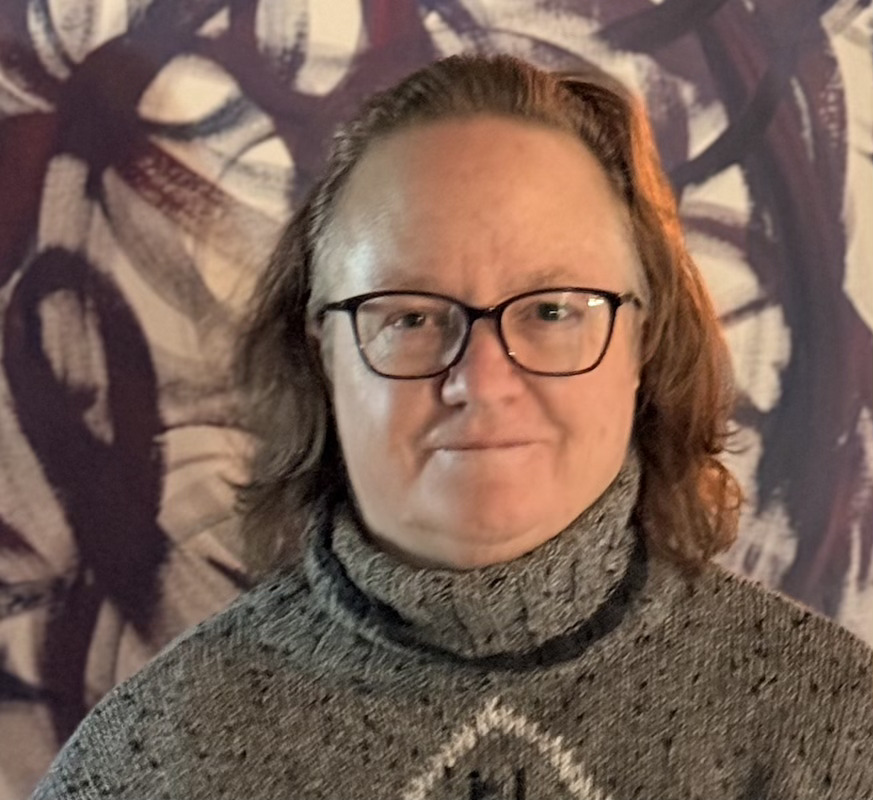
Amy Reichert
Amy E. Reichert is a professional freelance writer and software tester. Juggling both helps keep the writing new and the testing interesting. She’s been writing mainly technology-related blogs on software development and Quality Engineering for the past 14 years. However, since getting laid off for the last time, she’s expanded her writing into novels, general business topics, AI technology, legal content, profiles, travel, and educational blogs.
As a Parkinson’s patient, Amy is working to expand into writing more patient-centered information on Parkinson’s. Meanwhile, find a variety of published material on her LinkedIn profile: https://www.linkedin.com/public-profile/settings?trk=d_flagship3_profile_self_view_public_profile

This work is licensed under a Creative Commons Attribution 4.0 International License.