

What’s Most Important
doi: 10.18737/0607603967
AMA Citation: Ro GS. What’s Most Important. J Hum Rehabil. 2026;Fall. DOI: 10.18737/0607603967
Table of Contents
I see you sitting in the waiting room,
your attention drawn to the painting
on the wall. I wave my hand and say,
“It’s great to see you again.” You
give me a puzzled look and ask,
“Do you know me?”
I can name all your medications,
the four specialists you saw last week,
the elective surgery from two months past,
and all the complications thereafter. I can
share how each visit went before surgery:
You’d be sitting in the waiting room,
focused on your crocheting. You’d see me
as I’d turn the hall and greet me before
I could. With pep in your step, you’d
fill me in as we headed to my office.
You’d promise to bake me a loaf
of your famous banana bread.
But today’s walk to my office is quiet
once again. You’re wholly focused
on your gait, slow and unsteady.
And though you don’t say so,
I can see the pain that was once
a mere nuisance, now coursing
through your body with each step.
You ask, “Why am I here? Who are you?”
Your furrowed brows and tilted head
convey your uneasiness. This visit takes
the same course as the last. I introduce
myself and tell you what I know: who
you are, where you’re from, the favorite
neighbor’s dog you used to walk,
your last women’s group event.
Each seed planted sparks a memory.
The tension in your face lifts. “Oh, I do
know you!” Your affect brightens then
fades as you share your daily challenges:
loss of independence, increasing reliance
on others, loss of control, not just of your life
but even of basic bodily functions.
Worst of all, the discomfort
that was supposed to be cured by surgery
led to unimaginable consequences.
The things you loved––crocheting, baking
banana bread aren’t so easy.
They take time, energy and focus
that suddenly seem scarce. What brought
you joy and connection became
yet another task in your already full schedule.
Your memories are tucked away,
requiring cues to rediscover them,
as if the only way for us to reconnect
is to revisit your losses, frustration, disappointment.
Last month, I offered therapy and peer support,
but when they reached out, you responded,
“I don’t remember asking for this. No thank you.”
Yet you’ve come back today to see me,
your psychiatrist. So I take a different approach.
Together, we identify what’s most important to you
right now, even more than the pain: your precious time.
Instead of finding more to offer and add,
we think of ways to find you more time.
We consolidate sporadic appointments
to the first two days of the week.
We work with your specialists to simplify
your medications. We look through
your church website, so women’s group
doesn’t overlap with appointments.
We share these plans with all your doctors,
social worker and care coordinator. We’re all
focused on what’s most important to you.
As we wrap up this visit, you look at me the way
you looked at the painting in the waiting room,
except with a warm smile, as if the seeds have begun to
sprout at last.
We head back to the waiting area. I see
the determination in each step you take. You turn
around and say, “I do
know you! Now I remember. Next time
I’ll bring that loaf of banana bread.”
I feel sad knowing that when we meet
next month, we’ll need to go through this dance
again to get to the final minutes of our visit
where we reconnect and you remember again.
I may never taste your famous banana bread,
but in these brief moments of connection
your voice can be found and heard again,
and that’s what’s most important to me.
About the Author
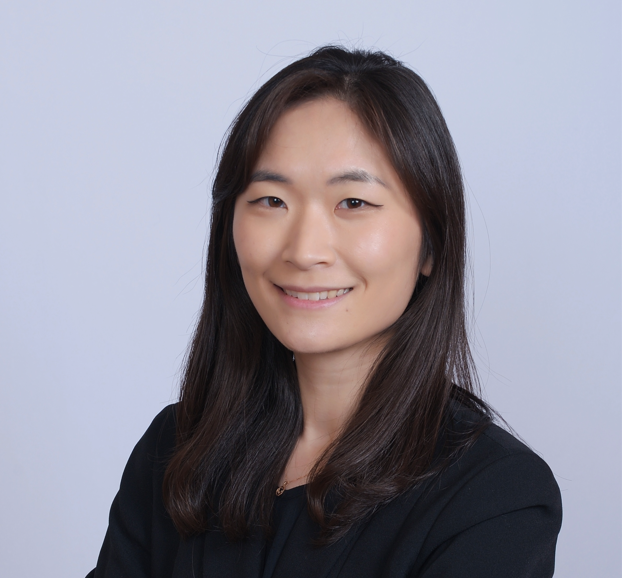
Grace S. Ro, MD, MS
Grace S. Ro, MD, MS is a Clinical Instructor of Psychiatry at NYU Grossman School of Medicine, where she serves as a teaching attending on an inpatient psychiatric unit. She graduated from Rutgers New Jersey Medical School and completed her psychiatry residency at the University of Rochester Medical Center, where she also earned a Master’s in Health Humanities, followed by a fellowship in geriatric psychiatry at the Icahn School of Medicine at Mount Sinai. Throughout her education and training, she has spearheaded interdisciplinary initiatives that use music and the arts to foster connection, reflection, and community engagement among healthcare professionals, trainees, and the broader community.
Her clinical practice focuses on personality, mood, and psychotic disorders in adults across the lifespan, with particular interests in brief integrative psychotherapy and psychodynamic psychopharmacology. She incorporates narrative approaches into both her clinical care and her teaching of medical students and residents. She has received awards recognizing her contributions to teaching, community service, and collaborative patient care. Her narrative writing has appeared in Academic Psychiatry, Academic Medicine, Journal of the American Geriatrics Society, Intima, Ars Medica, and APA Psychiatric News.

This work is licensed under a Creative Commons Attribution 4.0 International License.