

Table of Contents
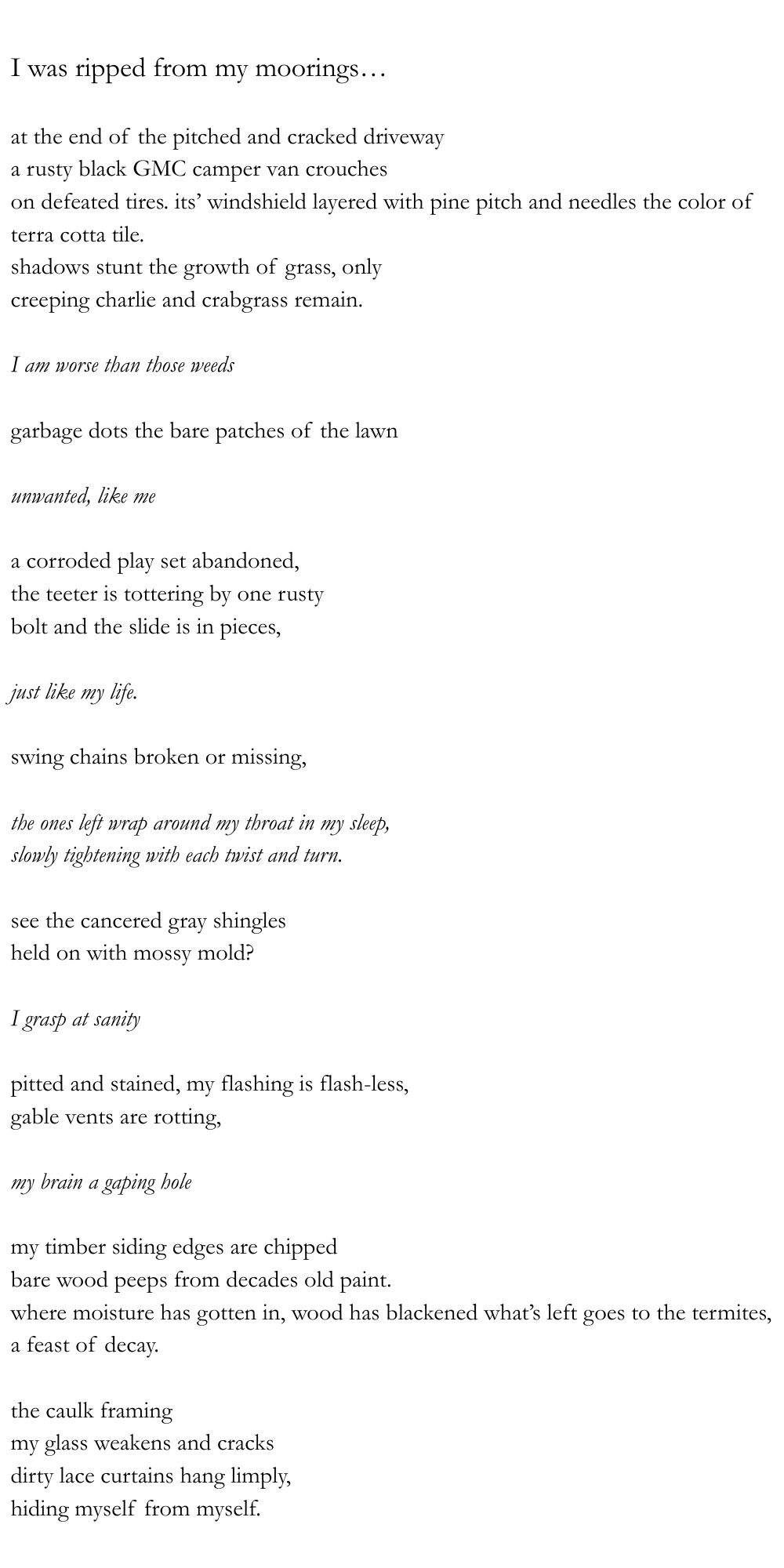
I walk by this old rundown house in the tiny village where I live, often with my dogs. I distinctly remember noticing it soon after I moved to the area in 2018. At that point, I was not writing poetry at all. I covertly took a photo of the house while out on our walk one day. It made me sad, a bit scared and something else I couldn’t quite put my finger on. One day, I just started writing about the house and after many edits, I finally shared a version of “Ripped From My Moorings” in our class.
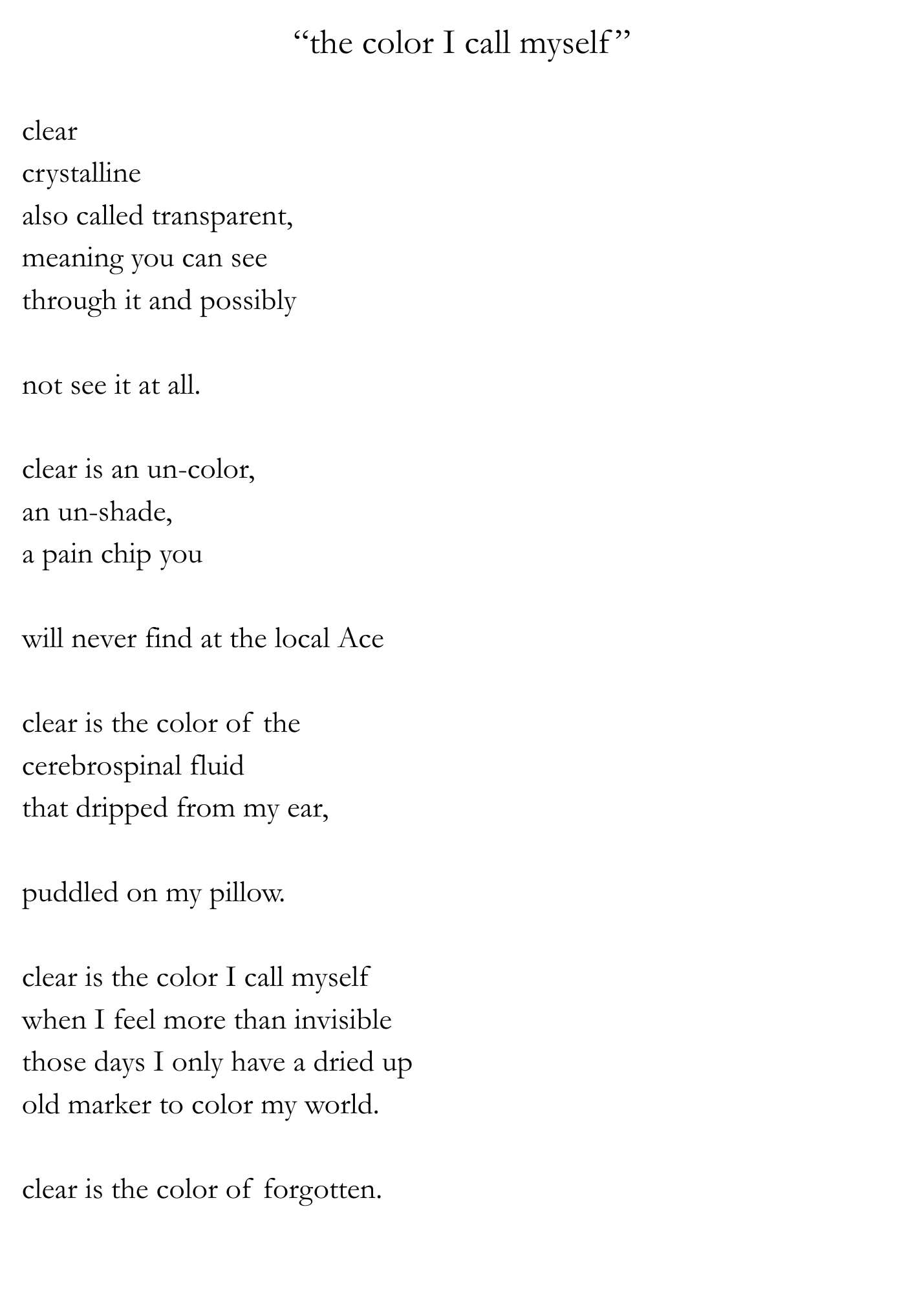
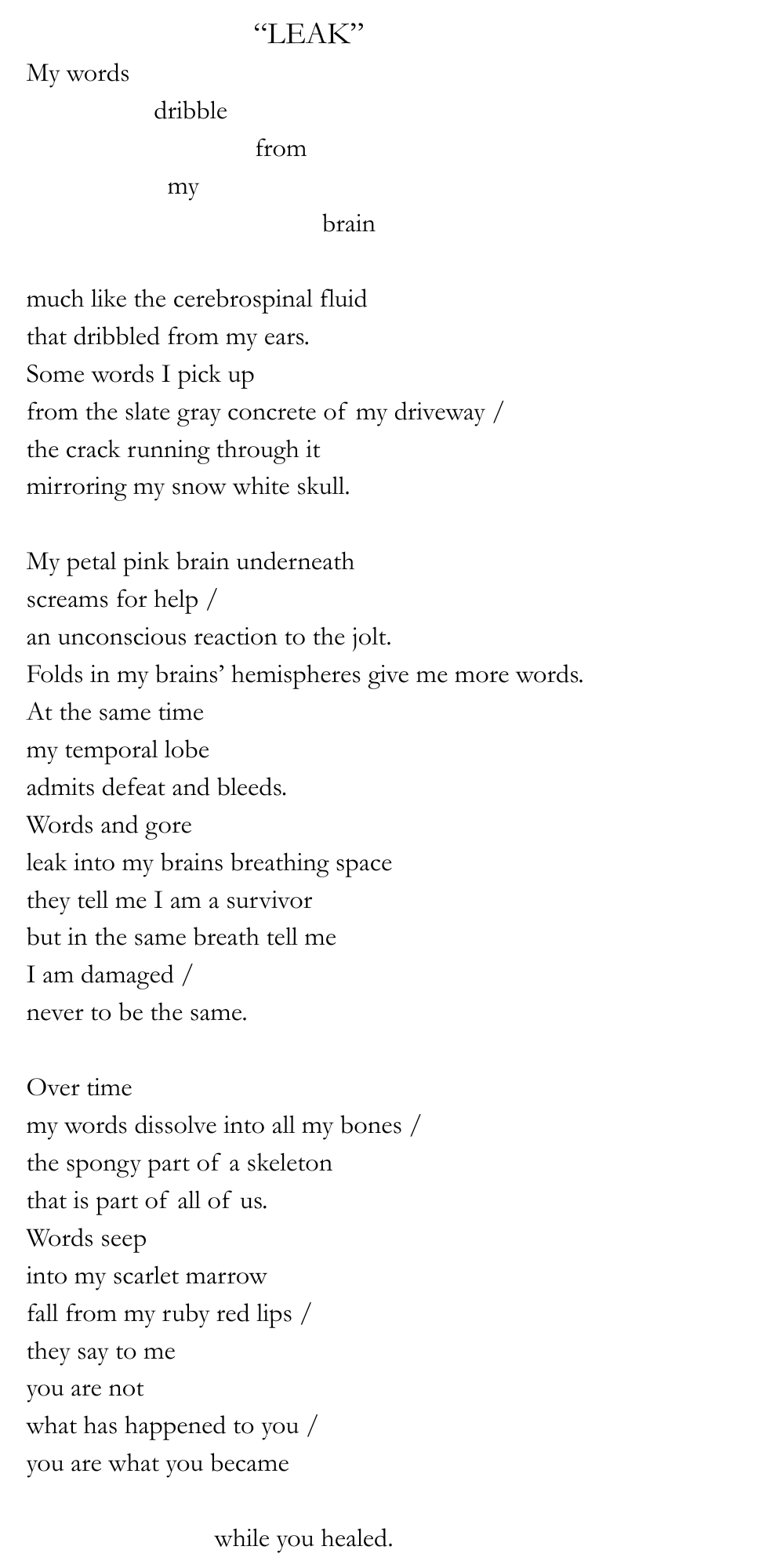
I am always nervous about sharing my work. I have been part of a poetry group for five years, and initially, my writing was just about the prompts we received in class from Brendan Constantine, L.A. based poet and teacher. I began to insert myself more into each poem as I realized how much I was processing my life while writing. If I remember correctly, my first real poem about my fall was created about a year into my writing. It was a poem based off a prompt asking where I got my words from. I named it ‘Leak’. At first, I shared ‘Leak’ thinking it wasn’t anything special, but it explained some of my thoughts about my fall. I cried every time I read it. The reception to the poem was always powerful, and I was encouraged to keep sharing it. Each time I cried, I felt a tiny bit better. I realized that by putting this out into the world, I was sharing something intimate, but also healing, not only to me, but to others.
I kept writing. And sharing, mostly in my class. Sometimes I would be brave enough to submit to other journals or publications. Opportunities for me to share in unconventional places presented themselves over and over, so I kept at it. ‘Leak’ started something for me. I have written more poems about my feelings and my life experiences in the time since. The things that I had shoved into a deep filing cabinet in my brain. The things I just put there, knowing on some level that I couldn’t process them, kept filling filing cabinets. I have started to open those cabinets slowly, to remember and try to process. I know now that there are people that want to hear about it. I wasn’t exposed to that much growing up. Life just happened to me. I have suffered from depression since my teenage years, and later anxiety joined the ride. I just kept swimming, like Dory. If it was bad, or good, I shoved it into that filing cabinet and tried to never look at it again. Should I say, my brain didn’t analyze it much, but I have learned over the years that my body did. I was just trying to survive. I thought, this was how I am supposed to be, how life is—just shove it away, get through it and shut up about it. With therapy, introspection, and poetry, I have learned differently. I wish I knew this many years ago, but I also think that if I had the processing skills I use now, then I wouldn’t be the writer I am today.
After over twenty years in the medical field, a majority before my injury, things just kept piling up. That is a whole other filing cabinet in my brain. I was never taught in school how my work would affect me, going from patient to patient, emergency to emergency, pretending to be fine. Seeing and doing the things necessary to keep people alive. To get them home to their family. The next patient would always need me, so on I would go and by the time I got home each day, I was exhausted and in no place to process anything. I’m sure every medical personnel has gone through this. I wonder how many of us haven’t taken the time to process their traumas as well. I know I am not alone.
I have taken a few classes but have no formal writing training other than middle and high school language classes. I don’t remember school poetry much at all. I just knew that Shakespeare was not anything I felt I could relate to. Some of my poems come from a phrase that is spoken or that I have read in a book, and some of my poems come to me in a dream. I have a notebook next to my bed with a pen because I have woken many times knowing that if I didn’t write it down, then I wouldn’t remember in the morning.
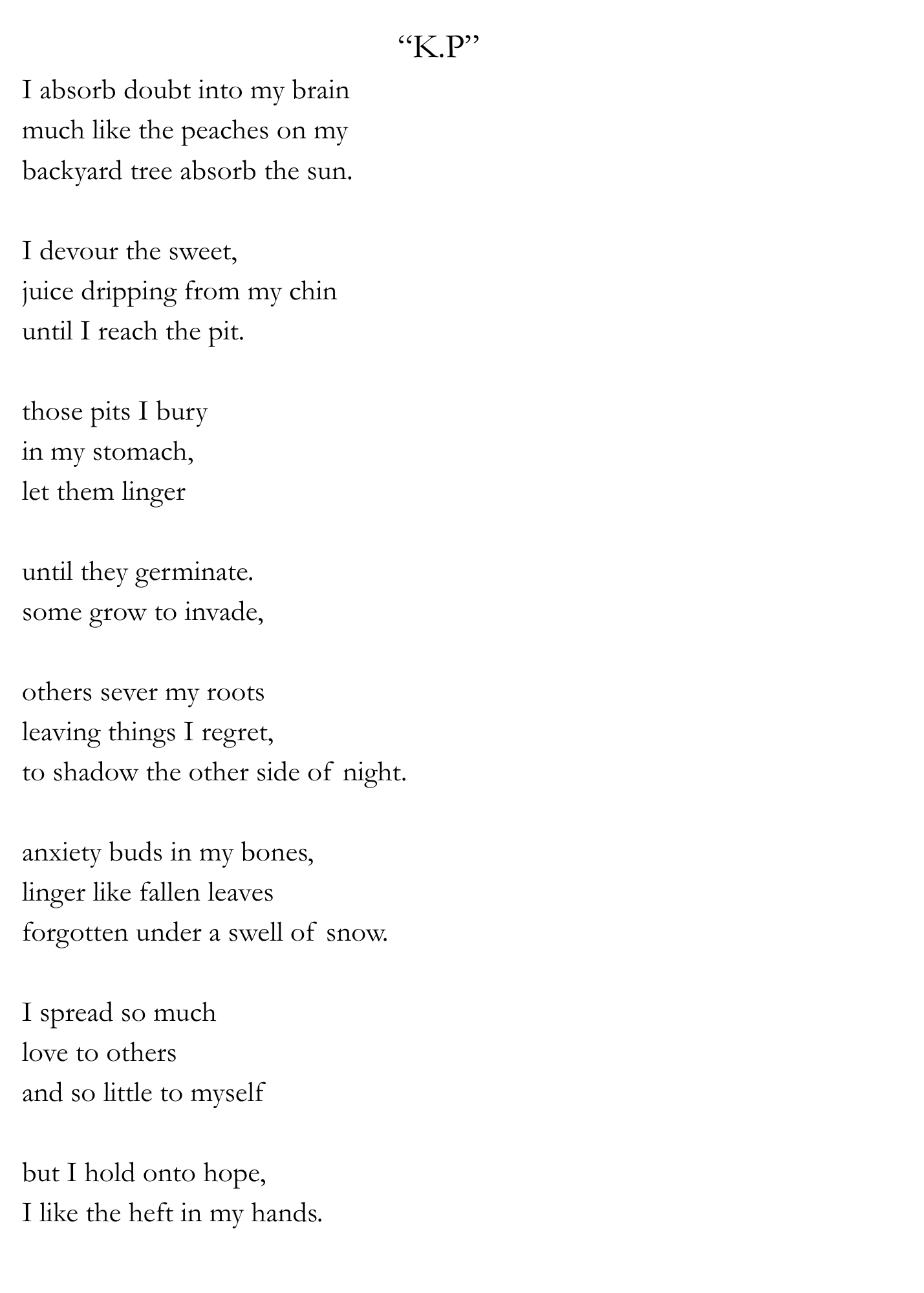
“K.P.” was written after I read Molly Brodak’s self-titled poem. I wrote my poem almost four years after she committed suicide in 2020. Her words felt like they were my words.
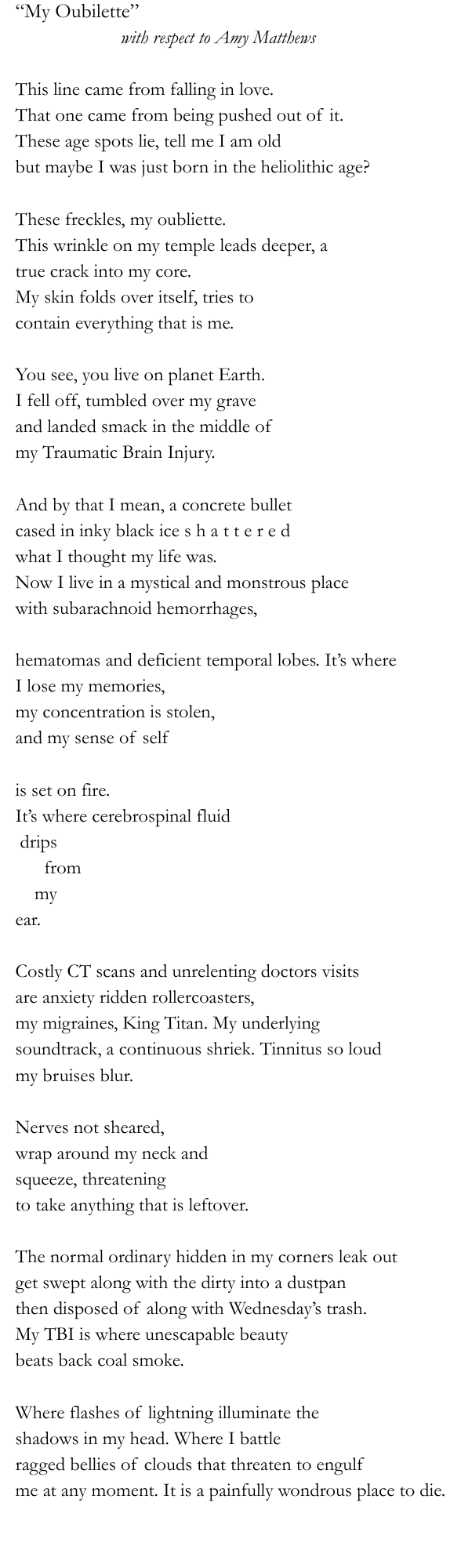
“My Oubliette” came from a submission I entered to a publication that was ultimately denied. I read the word oubliette in a book and looked it up, as I often do. I love that word. I love the mouth feel, the sound, the way my tongue twists when saying it aloud. I knew I wanted to use it in a poem…it felt like this poem was where it was meant to be. I also included a nod to my very first poem that got published in Rattle, “Coal Smoke.”
I was encouraged by some of my classmates opening up more and morein their poetry as the years passed. That kept me writing and processing my life. Now if I am able, I try to write when I am having difficulty with my thoughts. Mostly just scribbles or typing away. I put it away but sometimes I unearth it to try to make it into something. Then again, sometimes it just floats there in my zip drive. I am ok with that. When I am brave enough, I start a new poem, or something reminds me of one of the things in my filing cabinet and I pull it out and start the process over again.
As far as my personal writing style, I feel like it is a bit organic. I tend to use white space, metaphors, and similes. I love athesaurus,Ikeeparunning tab of words and phrases with their sources, I get ideas from my dreams, my conversations, my daily life and the feelings brought up. I try not to allow me to bury myself anymore. I read poetry, but I have hard time remembering it. I might remember a snippet and the poet, but that is about it. I am not afraid to play around with my poems. I have gotten better at editing with more experience. I like to read poems that tell stories, so unconsciously I believe I write that way. When I am editing, I chance the composition of the poem. Often I start with a large paragraph of words, then make stanzas and line breaks where I think they will be effective. It has come naturally to me. I may ‘feel’ that a poem needs more space, less words, or more descriptives while looking at it. I don’t really understand it fully myself, to be honest. Maybe because of the cognitive changes my brain went through recovering from my fall and subsequent bleed, my brain rewired itself to hear and see words differently. Fatigue causes my word finding to worsen easily.
Since my fall, I have worked diligently to build a true support system that I am able to be vulnerable with. It is not always easy, and it can be scary, but I know that poetry is not going away for me. I don’t always have enough time to commit to writing and when I started, I was adamant that I wanted to write poetry for myself first to not make it another thing I ‘had’ to do. I know many poets put themselves into their poetry, that is the poetry that resonates most with me-so that is how I write. I make changes and edits as needed but a fair part of my poems are my truth.
I have decided that poetry is part of the gift I received from my fall, but because I never wrote poetry before my brain injury, I will likely never know the whole story. I have an ability to use my life experiences, both good and bad and put it into words that others may need to hear. Words that may help them. That was what I said to myself from the beginning of my TBI journey. If I can help just one person with brain injury, I want to, and my fall was worth it. But my fall has also been worth it in many other ways. The people I have met, the opportunities presented to me, my ability to finally begin to process my life and learn from it on a different level.
So that brings me back to the ugly green house I walked past so many times. Many people will never notice it, as it’s just part of the detritus of life. But I have an ability to look at things differently. That green house became a metaphor for how I see myself. Recovery is not child’s play, and it has not been without its own pitfalls, but most days, I wouldn’t change it even if I could.
Acknowledgements
“With permission from Brain Injury Association of Wisconsin, previous published in “Poetry is Chocolate” poetry chapbook and “When Our Silence Speaks” chapbook.
About the Author
Kathryn Paulson
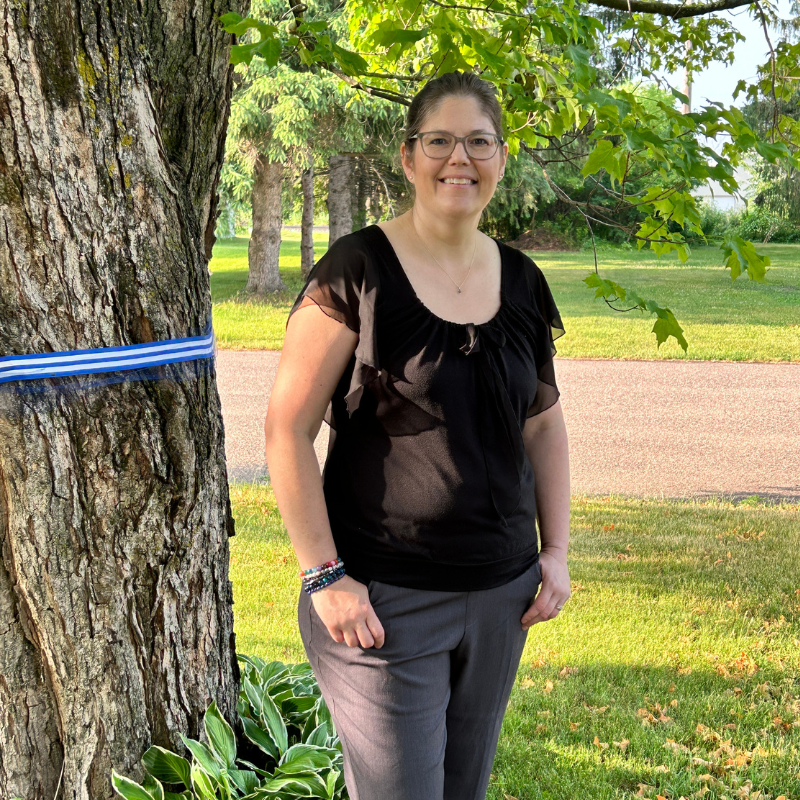
Kathryn Paulson is a nine-year TBI survivor who fell on black ice, fractured her skull, and had a subarachnoid hemorrhage on the temporal lobe of her right side. Her recovery has included some of the typical therapies, but when she started writing poetry in October of 2020, she began to heal in ways traditional therapy never touched. Through her work with poetry, she has regained an identity as someone other than a person with TBI. Poetry helps her understand herself better and has allowed her to help fellow survivors. Her poems have been published in Rattle, TBI Hope and Inspiration and Poets Choice. Along with the Thursday Night Poets, she has contributed to three chapbooks: “I Don’t Think I Did This Right,” published in 2022, and “Poetry is Chocolate,” published in 2023, and “When Our Silence Speaks” published in April of 2026. With her work at the Brain Injury Association of Wisconsin (Poetry & Books — Brain Injury Association of Wisconsin | Brain Injury Prevention, Advocacy, Education, Research, and Support) she continues to be an advocate for brain injury survivors, families, and caregivers.

This work is licensed under a Creative Commons Attribution 4.0 International License.