


Kindness as Transformation: A Metacognitive Moment With A Humanities Educator
Dr. Carey L Holleran sees kindness as the “underlying ethos” that physical therapy curricula strive to cultivate in students. In this report, she describes a moment when she rendered this concept a profound reality with a group of students. She wrote a personal letter to them, sharing her deepest faith-based reflections on treatment, and read it aloud in class. She presents that letter here. “Lean in with unexpected kindness every chance you get,” it reads. “When we deliver unexpected or even what we might think is undeserved kindness, we are agents of our own change for the better.”
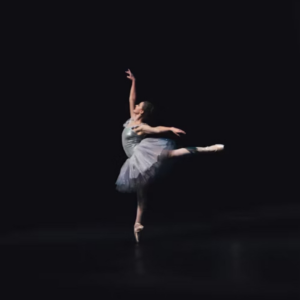
A Mere Reflection: When the Curtain Closes
Sophie Kooy trained as a ballerina when young, only to have her dreams shattered in an auto accident. This heartfelt reflection details her despair, what kept her alive when she felt no longer able to live, and how she eventually found healing. She also found a new passion—one that her vigorous training as a dancer, she now realizes, prepared her to take on. She is currently sharing her gifts with the world in a new direction that readers will applaud.
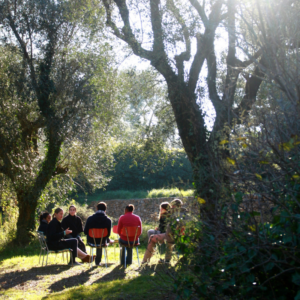
Exploration of the Use of Balint Groups in Physical Therapy Education
Many of the articles in the Fall issue of JHR speak of the need for increased empathy in rehabilitative care. Although the concept may feel groundbreaking, it is not new. Michael and Enid Balint created Balint groups in the 1950s, where physicians met regularly to discuss their cases with a focus on humanism. This article reports on the implementation of a Balint group experience in a current DPT curriculum. Direct quotes from the students detail the benefits of the experience for themselves—and their future patients.

Miraculous Medicine
Dr. Morgan Kelly recounts just one of her countless profound experiences with patients in the ICU. Her words encourage us to consider life and death; should all those who are clinically dead be brought back to life through technology? This patient didn’t want it, preferring to be back with “my God.” This poem prompts the reader to consider that two truths can exist concurrently: miraculous medicine to save lives and faith in a peace beyond death.
Stroked Poet: Thirteen is a Lucky Number
Barbara Huntington offers readers a fascinating chance to experience the workings of a poet’s brain post-stroke. These 13 poems, written as the days play out, move from confusion to blinding clarity and back again. Throughout it all, the poet is sharply aware, watching it all, commenting on it for the world to witness. At one point, he offers a brilliant commentary in ¾ time! This is an experience well worth sharing.
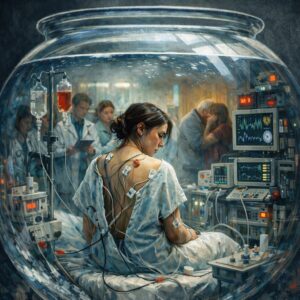
The Descent
This brief, powerful poem captures the agonizing experience of a frightened hospital patient—anonymous yet on display to strangers, alone in their “silent cries.” Beautifully composed, this masterful piece hits home in a few, raw seconds.
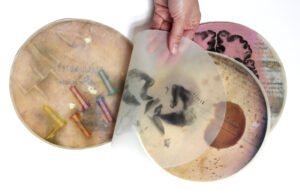
Lab Rats and Book Bodies: Creating Intersubjectivity for Patients and Practitioners
This moving artist’s report seeks to equate the experiences of lab rats with those of patients within our healthcare system. Are both simply objects of observation, of intervention? Or are they living beings with a shared power and beauty that can be witnessed at the microscopic level? The author translates her insights from the laboratory into an immediate experience for readers with homemade books whose images raise the minute to the universal.

To Be, to Inflect, to Feel
This insightful report encapsulates the value of adding a humanistic dimension to rehabilitation. As told through the eyes of a student physical therapist assessing her patient’s progress—and determining that adding empathy to the treatment process was crucial to achieving a positive result—delineates how the realization can occur in all clinicians. It is a direct, on-the-ground view of the importance of JHR’s mission.
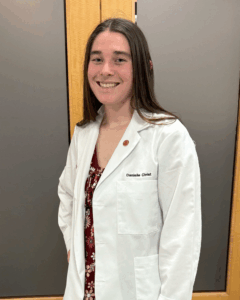
Physical Therapy is More than Just Physical
This insightful report encapsulates the value of adding a humanistic dimension to rehabilitation. As told through the eyes of a student physical therapist assessing her patient’s progress—and determining that adding empathy to the treatment process was crucial to achieving a positive result—delineates how the realization can occur in all clinicians. It is a direct, on-the-ground view of the importance of JHR’s mission.

Beyond Pathology: (Re)conceptualizing Distress in Chronic Pain Care
The “vignette case study” first presented here is based on a compilation of the author’s experiences treating patients with chronic pain. Crucial questions are then addressed. How big a part does stress play? What effect does culture have? The author dives deep into the multiple dimensions of the individual experience of pain. The article details why bringing humanities into rehabilitation is of crucial importance for people dealing with chronic pain.

Block and Fall
The COVID pandemic highlighted a reality that certain healthcare workers have always faced: as they care for others, they also put themselves at risk. How do you handle knowing you could be harmed by the very profession your heart has called you to join? In this powerful short poem, Katy Giebenhain encapsulates the mad courage it can sometimes take to simply go to work at a medical facility: “It’s the job.”
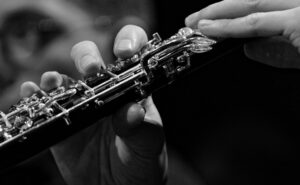
The Crying Oboe and Steady Strings
In this gentle yet heart-rending poem, Dr. Sue Curfman follows the notes of Dvorak’s 9th symphony (‘New World’), 2nd movement, as she pictures her patients in pain, “with whom I am privileged to walk.” As the different instruments rise and fade, she likens them to the struggle toward healing that rehabilitation teams – patient and therapist – experience together. The 2nd movement is available online; you can listen to its opening strains as you experience these words unfolding.

Political Advocacy in Occupational Therapy: A Professional Imperative
This study conducted interviews with occupational therapists to report on their perceptions of political advocacy. The interviews identified three key ways that advocacy fundamentally benefits OT: It helps practitioners fight for clients’ access to quality care; it advances the profession itself; and it can continually influence policy changes. But how can OTs find the time, and the space, to advocate? Quotes from interviewees bring the abstract down to the clinic level.
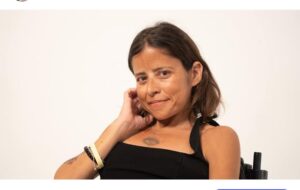
Can You Hear Me, Now?
In this inspirational piece, the author details how one crucial act, performed when she was a child by an occupational therapist, formed her entire life path. It was the simple act of teaching her how to hold a pencil in her hand to write. Fast forward to today, and Katherine Magnoli is a writer, a teacher, and an author of children’s books designed to help them choose their own unique career paths.

We Are All Missing Something: A Meditation on Amputation, Constraints, and Creativity
This brilliant Perspective raises a profound question: what if ‘disability’ is simply one point on a spectrum of constraints that inspire creativity in every person on earth? The author states, “…I struggle to know at what point I qualified in the minds of others as ‘disabled.’” He presents a powerful argument for focusing on what humans can do, and not on what may constrain us at any given point in our lives. A poetic must-read.