

The Advancing Accessibility and Disability Equity Summit: An Introduction and Reflection on Key Take-Aways
In her introduction to this special issue, Amanda Sharp, PT, DPT, PhD, presents a detailed report of how the Advancing Accessibility and Disability Equity Summit was envisioned and then brought to fruition. Sharp presents a day-by-day account of the Summit’s presentations, panel discussions, roundtables, and more. Her detailed recounting of the event offers a blueprint for other educators and practitioners seeking to develop their own forums on disability and inclusion. “All are invited to reconsider disability within and external to physical therapy,” she states.
We Are No Longer Alone: Student Panelist Reflections on the Advancing Accessibility and Disability Equity Summit
In a vibrant panel discussion on Day One of the Summit, five DPT students with disabilities presented their lived experiences in telling, poignant detail. Attendees later agreed this panel was the “pinnacle of the day.” In this article, the students note the effect their participation had on their own hearts and minds as well; their words show a renewed sense of hope and purpose. “This was a real meeting of the minds to solve the issues blocking the accessibility of our profession,” one author says. “I quickly began taking notes on these topics to take back to my program.”
Special Issue Editorial: An Invitation to Reorient and Re-imagine

In her editorial, Sarah Caston, PT, DPT, lays the groundwork for this special JHR issue and the importance of disability inclusion and equitable access within the rehabilitation profession. She argues that inclusiveness and justice are not inherent to caring professions and that clinicians and educators should seek spaces that encourage curiosity and vulnerability. She provides readers with action steps to “inspire[s] the moral courage needed to continue the vital and necessary work of caring for each other.”
Forging a New Future

While exploring the ongoing effects of disability on students, clinicians, and patients alike was a key aspect of the Summit, another crucial takeaway for attendees was a reference list offering guidance on moving forward. How do we improve our efforts to create equity of access, inclusion, and anti-ableism? In this introduction, Deana Herrman, PT, PhD, honors the groundbreaking work of disability rights activist Judy Heumann, and notes a good place to begin is with her book, Being Heumann. Along with co-authors, Sarah Caston PT, DPT and Priyanka Bhakta PT, DPT, she has created a list that offers a variety of self-education materials. “It is never too late to start, and it is always okay to keep learning, recognize when we don’t know enough, and strive to do better—for the future,” Herrman concludes.
Accessibility Accommodations on the National Physical Therapy Examination: An Exploratory-Descriptive Qualitative Study
This study reports on the negative impact on some NPTE candidates of seeking accessibility accommodations. The results show that requesting accommodations for testing puts an additional burden on these students, which can affect their academic, and even their professional, lives. The authors call for “improved ease of access to information,” and “a more streamlined approach nationwide” to the exam process for persons with disabilities.
The Young Doctor: One Day, Inshallah
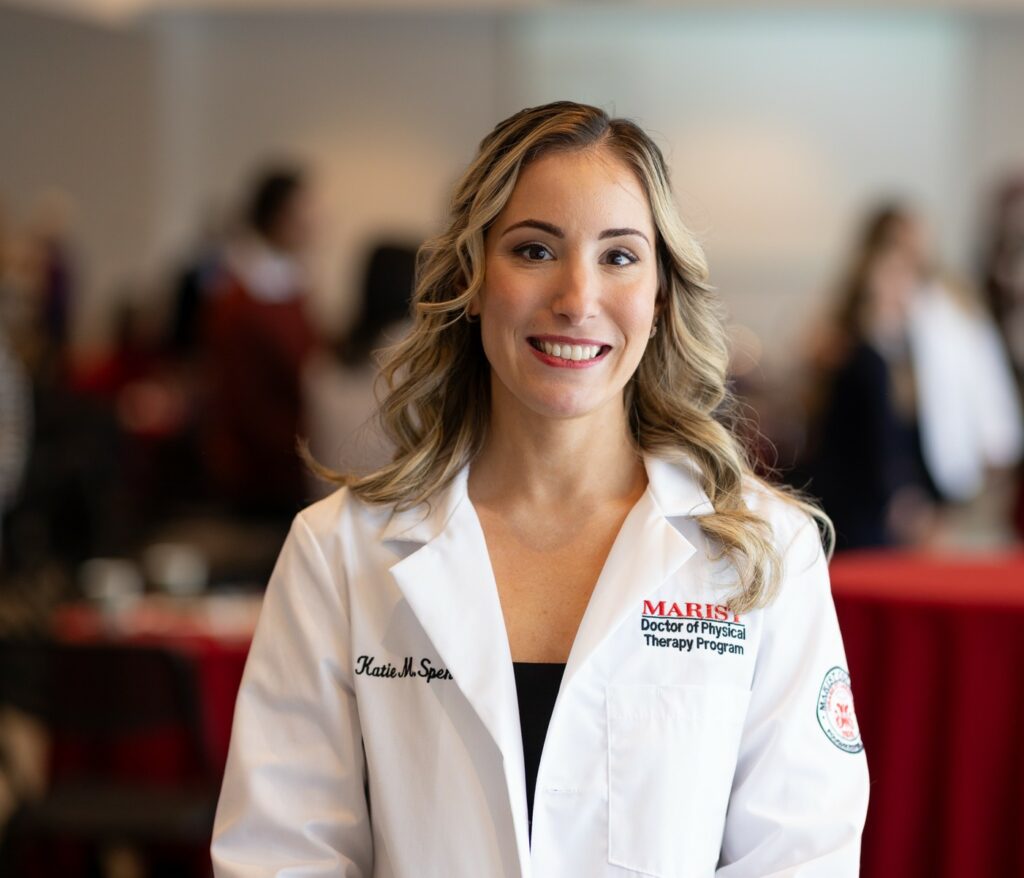
In her winning essay, “The Young Doctor: One Day Inshallah,” Katie Spencer recounts her transformative experience providing medical care in a Syrian refugee village during her time as a US Army medic. Central to her essay is an encounter with a young girl who dreamed of becoming a doctor, despite her school being destroyed by insurgents. Spencer invited her to follow along as she treated patients. Learning to innovate patient care with limited resources, Spencer prioritized listening to patients’ stories and recognized that “language barriers and cultural differences mean little when a bridge of universal compassion is built.” Her essay emphasizes that healthcare extends beyond visible symptoms, requiring providers to understand patients’ personal narratives and cultural contexts.
Learning From Experiences of Chronic Illness: A Book Review of The Room Sinatra Died In and Other Medically Adjacent Stories
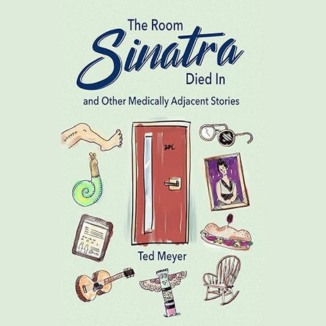
In this book review, author Ted Meyers reflects on his own writing process and how it has impacted his perspective on his life and chronic illness. “Writing is my way of preserving … moments,” he notes. In her commentary that follows, Priyanka Bhakta highlights the role of the caregiver in family-centered care as presented in Meyers’ book: “The stories convey the unavoidable impact of health on one’s relationships…” Teaching Tools at the end of the article suggest two of Meyers’ stories for healthcare students, with Discussion Points.
Advocating for Palliative Care Is Our Role: A Physical Therapist Perspective

This insightful and moving article argues for wider use of palliative care in end-of-life situations. Written from her personal experience with terminal patients, the author notes how, ironically, a focus on positivity can deny the much-needed comfort that palliative care provides. Contrasting a rural southern hospital and a top urban neurorehabilitation facility, she notes how her patients received more end-of-life comfort in the former. She calls for physical therapists to “advocate for better integration of palliative care principles into PT practice.”
Utilizing Drama to Teach Intervention Strategies for Patients With Alzheimer’s Disease: The Intersection of Humanities and Clinical Science

Clinical simulations are often used in entry-level healthcare education. However, according to the authors, these simulations lack the depth of understanding that drama can provide to students. This research report details how a two-act play written by the authors and presented here, employing professional actors, increased student understanding of effective interactions with Alzheimer’s patients.
Building Community Through Storytelling: A Case Report
These authors report on their most recent ‘StorySlam’ – an event hosted by USC’s Division of Biokinesiology and Physical Therapy – where Division members described their personal encounters with diversity, equity, and inclusion. The storytellers (including faculty, students, and patients) spoke for just 5 minutes each. But the attendees – many quoted here – noted the impact of those stories, and their enhanced sense of connection with their fellow Division members.