

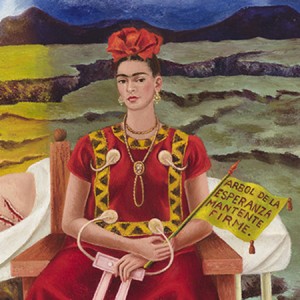
Frida Kahlo’s Body: Confronting Trauma in Art
doi: 10.18737/0607411236 AMA Citation: Conaty SM. Frida Kahlo’s Body: Confronting Trauma in Art. J Hum Rehabil. 2015; Summer. doi:10.18737/0607411236 Download the article (pdf) Table of

Poet in Profile: Natasha Trethewey
JHR’s inaugural poet is Poet Laureate and Pulitzer Prize winner Natasha Trethewey, who reflects that her own journey towards poetry began with memory – a desire to hold onto what was being lost. Taking us deeply into those feelings, her poem Give and Take describes her great-aunt Sugar’s experience of Alzheimer’s disease and how she was “losing her to her memory loss.”
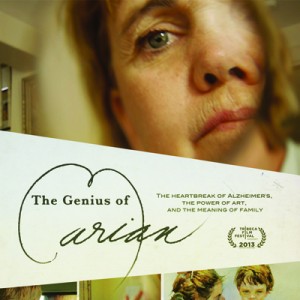
The Genius of Marian – A Family’s View of Alzheimer’s Disease
In this film review by Emilly Munguía Marshall, she explore the documentary Genius of Marian by Banker White, where we see a stirring and elegant portrayal of one family’s story dealing with the repercussions of Alzheimer’s disease. In the interview with the director, he poignantly shares an often unspoken feeling among family caregivers – the difficulty of loving someone who has been changed by disease, the challenge to “not have [that love] look and feel like it used to.”

A Voyage Homeward: Fiction and Family Stories—Resilience and Rehabilitation
As a masterful story-teller, Dr. Marshall Duke shares his compelling research with the Family Narratives project, in particular that “knowledge of family history [is] crucially important to well-being” and that both good and bad family stories serve to build strength and resilience.
Why a Poem in a Place Like This?
In Dr. Marilyn McEntyre’s article “Why a Poem in a Place Like This,” she reminds us of how poetry differs from prose, and her article serves as an affirmation for those of us who attempt to dabble in poetry writing as a reflective practice within our clinical care.
Visual Design: Exploring Data Visualization in Neuroimaging
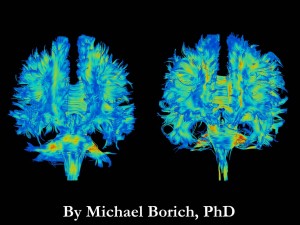
In this visual arts piece, Dr. Michael Borich’s image of the structural architecture of brain fiber pathways is more than a compelling visual display of a diffusion tensor imaging technique. He uses data visualization to underscore the importance of understanding and appreciating visual design as we seek to adequately try to portray and convey complex analyses and multi-dimensional information.
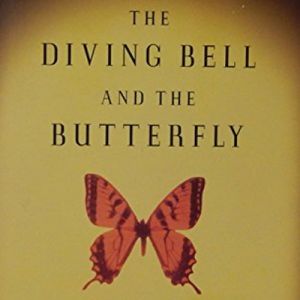
The Diving Bell and The Butterfly – From the Eye of the Unseen
doi: 10.18737/0607511235 AMA Citation: Caston S. The Diving Bell and The Butterfly – From the Eye of the Unseen. J Hum Rehabil. 2015; Summer. doi:10.18737/0607511235

Poem: Cadaver Anatomy – Learning Humanity
In Dr. Jim Carey’s poem, Cadaver Anatomy – Absorbing Humanity, his words urge us to look beyond the scholarship and past the muscles and ligaments to the person and life that once lived within the body: “Past your science / Past our machinery / Seize our stories / Uphold our soul” so that, “In awe, we learn anatomy / Higher, we learn humanity.”

Disability, Humility and the Self: Some Humanistic Perspectives
In this important essay, Dr. John Banja explores the universal experience of how disability alters our perspective of life and of the meaning that we place on our lives. He utilizes the dialogue within both Edson’s Wit and Jean Dominique Bauby’s autobiographical narrative The Diving Bell and the Butterfly to ask “[when] confronted with such an assault on one’s identity, how do we re-imagine ourselves after disability strips our previous perceptions of who we are, and what gives our lives meaning?”

They Have a Story
In this perspective piece, Emilly Marshall reflects on lessons learned from the early weeks of her very first clinical rotation. Her narrative, “They Have a Story” reminds us with a sincere vulnerability and honesty to pause – and remember – that we all “have a story,” if we only listen.

Embracing Brokenness
In this editorial, Dr. Sarah Blanton explores the rich collection of poetry, perspectives, media reviews, and visual arts offered in the Summer 2015 issue of JHR and reminds readers that “seeking wholeness means sharing our brokenness and our humanness together in common dialogue.”
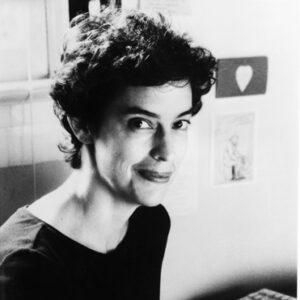
Wit — A Film Review, Analysis and Interview with Playwright Margaret Edson
In this compelling film review by S.A. Larson, she explores the masterful writing of award-winning playwright Margaret Edson in her Pulitzer Prize masterpiece, Wit. Included in this review is an interview with Margaret Edson in which she communicates her passionate belief that by incorporating theatre and playwriting into rehabilitation education, students can grow as clinicians, learn to confront their own mistakes and gain a deeper understanding of their patients and themselves.

American Physical Therapy Association Combined Sections Meeting – February 7, 2015
Download the article (pdf) Table of Contents The Editorial Board of the Journal of Humanities in Rehabilitation (JHR) discussed the development of JHR and the