


“Nanny’s on The Gear”: Chaos and Medicinal Cannabis in Advanced Cancer Illness Narratives
What do people diagnosed with a terminal illness talk about? How can their narratives influence care? This report explores the narratives of three women with advanced cancer who participated in a clinical trial of medical cannibis (MC). Within the women’s stories, quoted here, the authors found that MC—the drug, the idea, the trial— “is used as a tool to push against chaos, decenter illness, and support connection to different aspects of their lives.”
“Catch” and “Phantom”
“Catch” and “Phantom” explore the vulnerability, uncertainty, and emotional weight of rehabilitation through the eyes of a rehabilitation clinician witnessing two patients navigate profound bodily changes. Through vivid imagery and moments of physical and emotional connection, the poems illuminate the limits of clinical empathy and the difficulty of understanding pain that we cannot fully imagine. Together, they invite readers to reflect on the responsibilities of presence, the fragility of trust, and what it means to hold space for another person’s suffering.
Fixing Bodies, Missing Souls? Rethinking PT Education through the Humanities
As the current healthcare system sees ever-increasing crises in delivery of care, the voices calling for a more humanistic approach to treatment are growing nationwide. This article offers a perspective on our educational system, showing how true change toward more enlightened care needs to begin within our own curricula. The authors propose strategies for the addition of humanities into PT education—to form practitioners “who can skillfully balance both science and soul” in daily practice.

The Journey of a Physical Therapist with an Acquired Disability: Reflections and the Path Ahead
In October 1995, APTA celebrated its fourth Physical Therapy Month with the theme Physical Therapy: Hands-on Health Care. This article chronicles the journey of author Cathron Donaldson from that date, when she hesitated to share her experience as a physical therapist with a disabled hand, to the slightly more enlightened present. Her report concludes that “we must recognize that diversity in healthcare providers, especially disabled providers, directly benefits patient care.”

Hitting the Right Notes: Feasibility of Drumming to Assess Motor Outcomes Across the Lifespan
We are all naturally drawn to the positive effects of music and rhythm. These authors considered that music and drumming may also have important applications in patient assessment and treatment. They developed a quantitative observational content analysis that analyzed motor behaviors and vocalizations in individuals of different ages. Their study’s results provide insight into an approach that could be used to objectively track the value of drumming and vocalization in rehabilitation.
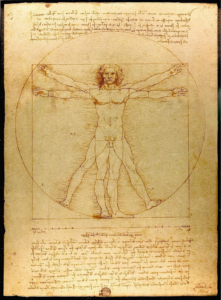
Measured
“Measured” examines how ideals of the ‘standard’ human body have shaped perceptions of difference across history. Drawing on the symbolism of the Vitruvian Man and the author’s lived experience with spinal cord injury, the poem explores the subtle ways that correction and normalization can be embedded within acts of kindness. It invites readers to consider forms of wholeness that exist beyond conventional measures of completeness.
Beyond the Algorithm: Where Curiosity Begins
Detailing her experience treating a chronic pain patient, this student author highlights a few statements from that patient that moved her beyond her academic training to a new level of curiosity and empathy. Simply treating pain symptoms was insufficient for this patient, Nguyen notes. “I wasn’t just treating a person’s spine, I was intersecting with an individual’s story.” The result? The patient summarizes it best: “I didn’t know PT could feel like therapy.”
In the Chair, At the Table
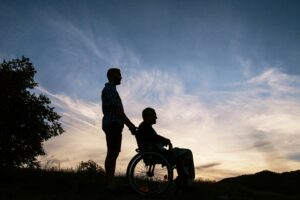
Sometimes, one student’s perspective can change an educator’s view of a long-held “rite of passage.” In this fascinating account, Dr. Eubanks describes receiving a student’s unique take on the 24-hour wheelchair experience. A common assignment in DPT departments nationwide, the students’ results often focus on accessibility issues. However, this student took a different route—and opened up a profound discussion on empathy.
A Critical Review of Health and Rehabilitation Literature Regarding People With Spinal Cord Injuries Who Are Both Caregivers and Care Receivers
Research on spinal cord injury focuses on patients as care receivers. But what about those people with SCI who are also required to be caregivers? These authors conducted a literature review of 13 peer-reviewed studies published between 1980 and 2021 to address that question and more. This article presents their results, and calls for more enlightened understanding, and inclusive research that reflects “the lived realities of caregivers with SCI.”

The Discipline of Curiosity
This thoughtful student essay digs deep into the concept of curiosity, identifying its many possible phases and iterations as a clinician and patient progress through physical therapy. The author describes a specific experience with a patient who stated she just wanted “someone to believe me.” Miles-Williams details the phases of curiosity she passed through to help this patient feel heard. She concludes that curiosity is a form of resistance to assumptions that may inhibit care.

Complexities in Consent: Seeking Permission in Physical Therapy Practice
In light of the revised APTA Code of Ethics’ explicit statement that physical therapists need to obtain ongoing informed consent from patients or clients, this article explores what that standard can mean for clinicians on a daily basis. What is informed consent? Is there a spectrum of consent that can apply to treatment? What are today’s best practices in consent? The author addresses these concepts and details how we might best apply them in the clinic.

How Individuals with Disabilities Experience Therapeutic Alliance in Physical Therapy: A Qualitative Analysis
Do patients receiving rehabilitation benefit from being treated by a physical therapist who also has a disability? This study addressed that core question. Participants included PTs with or without disabilities and their patients. Results showed that a shared identity of disability “positively impacted therapeutic alliance.” The article details the research process, and offers suggestions for its application in the clinic and the university.